Reform of the provinces: quo vadis?
How the Flemish Region used Articles 41 and 162 of the Constitution and the 2016 Tasks Decree to strip the provinces of person-related competences from 2018.
Translated from Dutch. The original is the authoritative text. Read the original.
Key points
The article sets out the constitutional basis of provincial autonomy (Articles 41 and 162 of the Constitution) and the Regions' broad freedom, recognised by the Constitutional Court and enlarged by the sixth state reform, to reorganise or even abolish the provinces. It describes the Flemish decrees of 2012 and 8 November 2016, which remove all person-related competences from the provinces from 1 January 2018. The author criticises the reform as largely centralising rather than decentralising, notes the unclear line between territory-related and person-related competences, and calls for a long-term vision on the supra-local level.
The Flemish province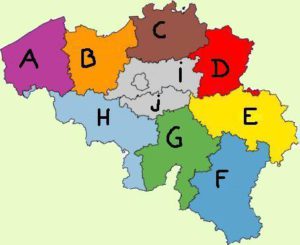 s are having a hard time. After a years-long debate on the usefulness of our provincial institutions, the Flemish Government reached an agreement in 2014 on the future of the supra-local level. In itself, it is not illogical that an evaluation of the provincial level takes place. In the turbulent constitutional landscape of the 20th century, the provinces have after all remained virtually unchanged. The municipalities became stronger and larger under the influence of the merger movements of the 1970s, and the federalisation of Belgium went hand in hand with the creation of the Regions and Communities. The provinces thus not only competed with the local authorities and their inter-municipal bodies; from the top down, too, they feel the hot breath of the Flemish institutions. The playing field became smaller and the number of players larger.
The Flemish coalition agreement therefore stated: “we will slim down the provinces further”. Not only would the provinces, from 1 January 2017, focus solely on territory-related competences, they would also lose all provincial person-related competences. In the meantime, the deadline has been moved to 1 January 2018 and the Flemish Government has had to adjust or abandon some plans. Nevertheless, the slimming down should be complete from next year. The redesign of the provincial level of government can be placed within a broader restructuring movement in which the inter-municipal cooperation structures, the public social welfare centres (OCMWs) and the local authorities are also given a renewed role.
The constitutional context of the provincial level
On the basis of Article 41 of the Constitution, the Constitution grants the provinces a general competence over exclusively provincial interests. As territorially decentralised authorities, they regulate all provincial matters relating to their territory. Article 41 of the Constitution does not itself, however, determine what these interests exactly entail, but via Article 162 of the Constitution links the definition of those interests to the principle of legality. Only by law or decree can the precise content of the competence of the provincial councils be regulated for everything of provincial interest. Within this framework, they are given the freedom, at their own discretion, to issue regulatory norms and to chart a policy. Within the notion of provincial interests, they thus have the prerogative of their provincial autonomy. The provinces can themselves assess where provincial needs lie and derive from this competences to carry out administrative acts and to take matters upon themselves. Inevitably, this means that they regularly compete with the local and Flemish levels.
Provincial autonomy, however, has its limits. The provinces remain bound by the hierarchy of legal norms and the administrative supervision of the federated entities. Provincial autonomy can be curtailed to the extent that a decision has an impact on the general interest. As Article 162, second paragraph, 2° of the Constitution emphasises, only a law or decree can give substance to the notion of provincial interest. Depending on whether the legislature or decree-maker defines the provincial interest more broadly or more strictly, the provinces receive proportionally more or fewer competences.
Since the fifth and sixth state reforms, the Regions have had extensive autonomy with regard to the decentralised authorities. Apart from a few minor exceptions, most aspects of competence regarding the decentralised authorities have been allocated to the Regions. As a result, they de facto have the autonomy to reorganise the provincial level. Even more so, thanks to an amendment of Article 41 of the Constitution in the sixth state reform, the Regions can decide to abolish the provinces and possibly replace them with supra-municipal authorities.
This broad freedom to reorganise the provinces was already expressly recognised by the Constitutional Court in its judgment of 25 May 2005. Local autonomy must respect the hierarchy of norms. Even though the provinces may in principle determine for themselves what is of provincial interest, it is nevertheless for the Regions to determine what is of municipal, provincial or general interest. The Regions can even prohibit the provincial authorities from continuing to act in certain matters. According to the Court, restrictions on provincial autonomy are only unconstitutional when they are “manifestly disproportionate” and “if [the restriction] would result in the provinces being deprived of all or the essence of their competences, or if the restriction of the competence could not be justified by the fact that it would be better exercised at another level of competence”. In short, according to this case law, the Regions have a great deal of freedom to curb provincial autonomy.
Restructuring of the Flemish provincial level by decree
The Flemish Region did not hesitate to use its competences. On 9 December 2005, the Flemish Parliament adopted the current Provinces Decree. Although the provincial interest was then described more concretely for the first time, the local autonomy of the provinces remained virtually unchanged.
The first substantial restriction came with the decree of 29 June 2012 amending the Provinces Decree. The Flemish decree-maker linked the notion of provincial interest to an exhaustive list of provincial person-related competences and further delimits the provincial interest. According to the current Article 2, §3, first paragraph of the Provinces Decree, the provinces may only exercise those person-related competences that have been expressly assigned to them by law or decree. Person-related matters now only fall under the provincial interest if the decree-maker considers them to be of provincial interest. At first sight, such an arrangement seems a particularly large restriction of provincial autonomy. According to the opinion of the Council of State on this decree, however, the provinces do not thereby lose the essence of their provincial competences and this does not constitute an impermissible restriction of provincial autonomy. The Flemish decree-maker thus has a wide margin of appreciation.
The Flemish Government felt strengthened in its grip on the provinces and made plans to thoroughly reform the provincial level again shortly. From 1 January 2018, it wants to exclude person-related competences entirely from the provincial interest, with the aim of tackling inter-governmental competition and inefficiencies. The provinces thus lose their entire say over person-related matters, and the Flemish decree-maker transfers their competences to the local or Flemish level, together with a far-reaching transfer of staff and assets. These policy lines have been formalised through the decree of 8 November 2016 on the renewed tasks and amended financing of the provinces (hereinafter: Tasks Decree), which enters into force on 1 January 2018. In addition, the Flemish decree-maker is radically changing the existing fiscal system of provincial surcharges and cutting sharply the number of provincial councillors and deputies.
The Tasks Decree, together with an amendment of the provincial electoral system, forms the crux of the Flemish Government’s current plans to restructure and reposition the provinces. According to the opinion of the Council of State, the restructurings do not this time either entail a manifestly disproportionate restriction of local autonomy.
Evaluation of the legislative amendments
A number of reservations can, however, be made about these plans. First and foremost, it is striking how few of the original person-related competences of the provincial institutions flow through to the local level. Contrary to what the Flemish Government claims, there appears to be little evidence of the promised decentralisation movement. On the basis of Articles 4 and 5 SAIR, the bulk of the competences automatically flows back to the Flemish level. In the absence of express task assignments or transfers of competence, the local authorities are thus allocated little. In the light of the principle of subsidiarity, this quasi-automatic centralisation movement is a missed opportunity.
In addition, the distinction between person-related and territory-related competences is not always clear. The Flemish decree-maker links this distinction to Articles 4 and 5 of the SAIR. Although this provides a good frame of reference, an actual question of competence is often an ad hoc matter. Much depends on how the aspects of competence under Articles 4 and 5 SAIR are interpreted. Logically, the provinces can therefore (try to) apply an extensive interpretation of the territory-related competences. The Flemish decree-maker has not touched the open task assignment of the provincial territory-related competences. Here too, however, a closed task assignment could help reduce the pressure of administrative competition. The Constitutional Court and the Council of State do not, in any event, appear to oppose this.
The future provincial package of competences can therefore be described as somewhat artificial. Several provincial task assignments relating to person-related competences – albeit to a limited extent – thus still remain. The provincial authorities thereby retain, among other things, their tasks relating to various institutions and provincial education. The reform makes the provincial package of competences somewhat more transparent and homogeneous, but ambiguities remain. Coordination and consultation between the administrative bodies therefore remain necessary.
The not always clear distinction between territory-related and person-related competences encourages conflicts of competence. The question can moreover be asked whether removing all person-related competences was really necessary. The Flemish decree-maker could also have achieved its objective through a stricter definition of the provincial package of competences. The provinces have, after all, already had a closed person-related task assignment since 2012.
Quo vadis?
For the time being, the Tasks Decree does not herald the end of the provincial level. The financial resources and person-related competences of the provinces are being cut, but the impact on administrative clutter and inter-governmental competitive pressure remains rather marginal. The transfer of competences and resources is mainly centralising towards the higher entities, with little or no account taken of the local authorities and of meeting their (supra-)local needs. The Flemish level lacks the time and courage to thoroughly rationalise and reposition the competences and mutual relations of the Flemish, provincial and municipal levels.
Formulating a modern answer to the traditional provincial institutions is, of course, a task that must not be undertaken lightly. Developing a modern intermediate (whether or not provincial) level of government between the municipalities and the Flemish government requires a thorough reflection as well as the necessary tailoring. Only after a clear Flemish vision has been formed and a period of consultation with the local authorities will it be possible to roll out a supported, effective and future-proof reform. A sound long-term vision is, after all, a must in order to optimise inter-governmental relations and to offer legal certainty to the (supra-)local authorities, citizens and associations.
(A broader study on the future of the Flemish provincial level can be found in the master’s thesis of Robin Verbeke under the supervision of Jurgen Goossens, which forms the basis of this contribution.)
BIBLIOGRAPHY
- ALEN, A., DALLE, B., MUYLLE, K., PAS, W., VAN NIEUWENHOVE, J. en VERRIJDT, W., (eds.), Het federale België na de zesde staatshervorming, Brugge, die Keure, 2014, 651 p.
- JUDO, F., “Taakstelling en financiering van de provincies – des Guten zu viel?”, RW 2015-16, afl. 31, 1202.
- KEUNEN, S., “Lokale autonomie als (essentieel) kenmerk voor de democratische legitimiteit van lokale besturen”, TBP 2016, afl. 4-5, 248-260.
- REYNAERT, H., VALCKE, T. en WAYENBERG, E., (eds.), Grensoverschrijdend of grensverleggend? De Vlaamse provincies uitgedaagd, Brugge, Vanden Broele, 2011, 204 p.
- STEYERS, K., WAYENBERG, E. en REYNAERT, H., “Van millefeuille tot boekske? Recept van de interne Vlaamse staatshervorming”, Bb&B 2010, afl. 4, 317-331.
- VALCKE, T., “Live and let die? Welke toekomst voor de Vlaamse provincies?”, Bb&B 2010, afl. 4, 360-379.
- VANDE LANOTTE, J., GOEDERTIER, J., HAECK, Y., GOOSSENS, J. en DE PELSMAEKER, T., Belgisch Publiekrecht, I en II, Brugge, die Keure, 2015, xxxii + 1594 p.
- VELAERS, J., VANPRAET, J., PEETERS, Y. en VANDENBRUWAENE, W., (eds.), De zesde staatshervorming: instellingen, bevoegdheden en middelen, Antwerpen, Intersentia, 2014, 1032 p.
- VERBEKE R., Een hertekende provincie als antwoord op een moderne nood aan bovenlokale structuren, onuitg. Masterthesis Rechten UGent, 2017, https://lib.ugent.be/catalog/rug01:002349572, 132 p.
- WAYENBERG, E. en DECORTE A., “Het Vlaamse stadsregionale beleid: ‘Bottom-up’ te bewegen?”, Bb&B 2010, afl. 4, 347-359.
Image: source