King holds De Wever's resignation in consideration: what the Belgian Constitution says
King Philippe holds PM De Wever's resignation in consideration. What Articles 96, 46 and 106 of the Belgian Constitution say, and why it is a convention.
Key points
On 2 November 2026 Prime Minister Bart De Wever offered his government's resignation after budget talks failed; King Philippe held his decision in consideration and consulted the coalition party chairs, with the Prime Minister due back on 6 November. The Constitution only regulates resignations forced by the Chamber (Article 96), so holding a resignation in consideration is a convention. Dissolution under Article 46 requires a Chamber majority, not a royal decision.
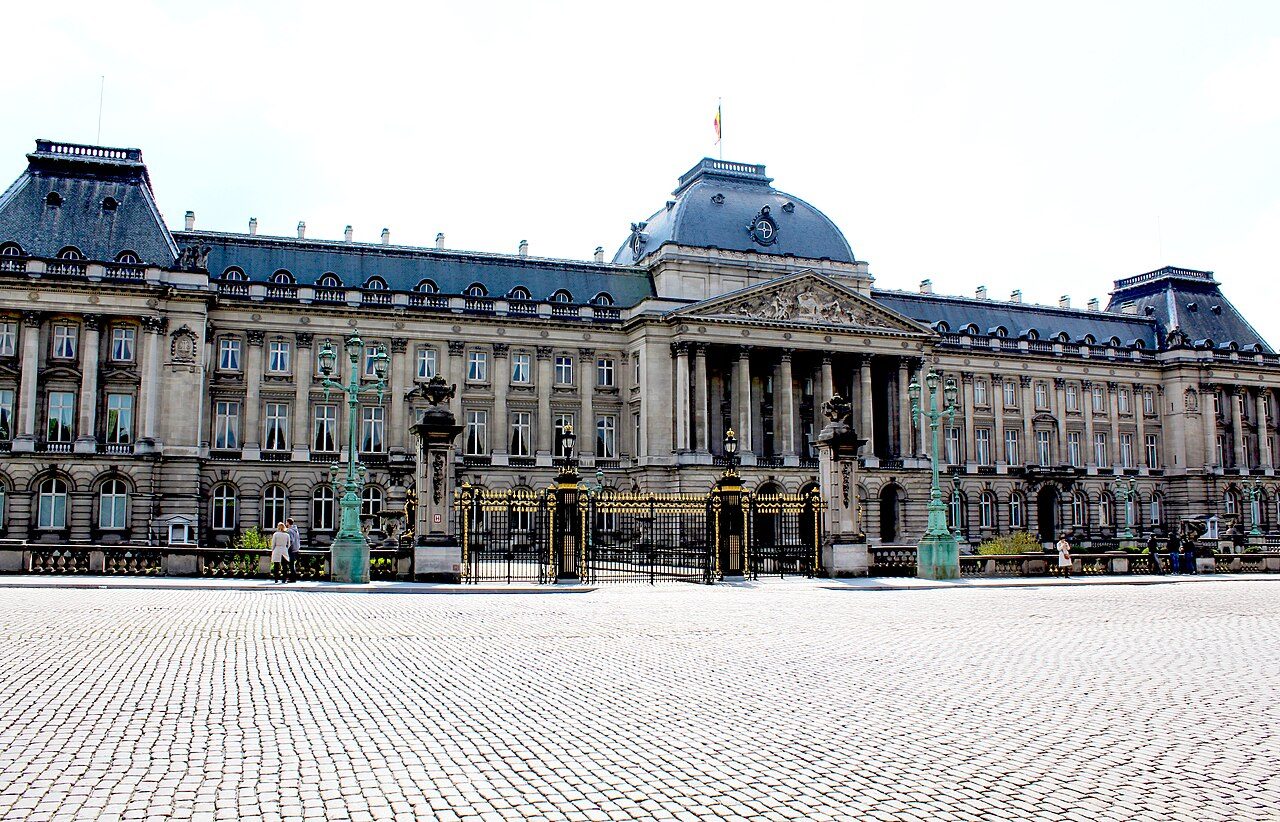
On Monday 2 November 2026, after budget negotiations within his five-party coalition had broken down overnight, Prime Minister Bart De Wever (N-VA) offered the resignation of his government to King Philippe. The King neither accepted nor refused it. According to the Royal Palace, he "holds his decision in consideration" and began consulting the chairs of the coalition parties, with the Prime Minister due back at the Palace on Friday 6 November. The episode is a textbook illustration of one of the least codified, yet most frequently used, mechanisms of Belgian constitutional practice.
The facts
The federal government, composed of N-VA, MR, Les Engagés, Vooruit and CD&V, had been trying for about two months to agree on a budget path involving around €10 billion in savings. Reporting by VRT and The Brussels Times describes a classic left-right divide: Vooruit, CD&V and Les Engagés sought a larger contribution from the "strongest shoulders", which N-VA and MR opposed. After the negotiators parted without a deal, De Wever was received at the Palace on Monday morning.
The Palace's statement is short. The Prime Minister offered his resignation following the failure of the budget negotiations within his government. The King holds his decision in consideration and will consult the party chairs of the coalition partners. He regrets that no agreement was reached on a credible budget suited to current challenges, states that in a context of great geopolitical uncertainty and considerable economic challenges the country cannot afford a prolonged political crisis, and appeals to all parties to put the general interest and a willingness to compromise first.
The consultations followed the announced pattern. On Tuesday 3 November the King received Yvan Verougstraete (Les Engagés) in the morning and Sammy Mahdi (CD&V) in the afternoon; on Wednesday 4 November, Conner Rousseau (Vooruit) and Georges-Louis Bouchez (MR). RTBF reported that the N-VA chair would follow on Thursday. Leaving the Palace, Rousseau said that Vooruit still wants an agreement within the current government, provided it is "fair". Meanwhile, Anders, the Flemish liberals, offered to support an alternative majority, an offer Verougstraete rejected.
Legal framework
The King, his ministers and responsibility
Under Article 37 of the Constitution, federal executive power, "as regulated by the Constitution", is vested in the King. That formula is immediately qualified. Article 88 makes the person of the King inviolable while his ministers are responsible; Article 106 provides that no act of the King has effect unless countersigned by a minister, who thereby assumes responsibility for it; and Article 105 limits the King to the powers that the Constitution and the special majority acts expressly confer on him. Ministers are accountable to the Chamber of Representatives (Article 101).
Article 96 adds that the King "appoints and dismisses his ministers". Its second paragraph describes only one situation in which the federal government must offer its resignation: when the Chamber, by an absolute majority of its members, adopts a constructive motion of no confidence proposing a successor as Prime Minister, or proposes such a successor within three days of rejecting a motion of confidence. The King then appoints the proposed successor.
What the Constitution does not say
None of this applies to the present case. The Chamber has voted on nothing; the government has simply failed to agree internally. The Constitution does not regulate a resignation offered spontaneously by the Prime Minister, nor what the King must do with it. Holding a resignation "in consideration" is therefore a constitutional convention rather than a written rule: the offer is received, but no royal decree accepting it is adopted. Legally, the government remains in office with full powers, since it has not been dismissed. Only acceptance would turn it into a caretaker government limited to "current affairs", as happened to the Leterme II government from 26 April 2010.
Dissolution is not a royal choice
Nor can the King respond to the crisis by calling elections. Article 46 allows the Chamber to be dissolved only if it rejects a motion of confidence and does not propose a successor Prime Minister within three days, if it adopts a motion of no confidence without simultaneously proposing a successor, or, upon the resignation of the federal government, if the Chamber consents to dissolution by an absolute majority of its members. In the event of early dissolution, the new federal term lasts only until the next European Parliament elections. Elections would thus depend on a majority in the Chamber, not on the Palace.
The budget
The constitutional stakes of the underlying dispute are found in Article 174: each year the Chamber of Representatives approves the budget. If no budget is adopted in time, the State operates on "provisional twelfths": each month, no more than one twelfth of the previous year's expenditure may be spent. The Brussels Times notes that parliamentary approval of a budget takes six to eight weeks, which makes a start of 2027 on provisional twelfths increasingly likely. Federal Belgium already began 2026 that way, for three months.
Analysis
A neutral instrument with political effects
Holding a resignation in consideration is the most visible use of what remains of the King's room for manoeuvre. The Palace does not take sides on the substance; its statement speaks only of the general interest and of compromise. Yet the choice has real effects. Accepting the resignation would have ended the government and, as political scientist Carl Devos (Ghent University) put it to VRT, meant "game over". Holding it keeps every option open for a few days and sets a deadline.
Political scientists interviewed by VRT read the move in that light. Dave Sinardet (VUB and UCLouvain) described it as part of the ritual of raising pressure on the parties, with the aim that the chairs eventually make concessions. Nicolas Bouteca (Ghent University) observed that the fact that the King now talks with the party chairs shows that, in the Belgian system, there is no way around them.
That observation deserves emphasis from a constitutional perspective. The Constitution speaks of the King, the ministers and the Chamber. It does not mention party chairs, who hold none of the powers in Articles 96 or 46. Yet the royal consultations are addressed to them, not to the ministers in the government. The convention thus formalises, at the Palace, the reality of Belgian particracy: the decisive negotiating partners are outside the government.
Ministerial responsibility is preserved
Does the King's active role sit uneasily with Articles 88 and 106? We think not, provided the convention is respected. Holding a resignation in consideration is not a legal act requiring countersignature, and the consultations produce no binding decision. The decisive acts, if they come, will be the acceptance of the resignation or the appointment of a new government, which require ministerial countersignature in the usual way. A 2015 interview on this blog on the future of the monarchy argued that the King no longer has any real hold over a government's resignation. The present episode nuances that claim: the King does not decide whether the coalition survives, but he does control the timing.
Precedents
The technique is not new. On 22 April 2010, after Open VLD withdrew from the coalition over the splitting of the Brussels-Halle-Vilvoorde electoral district, Prime Minister Yves Leterme offered his government's resignation. King Albert II held it in consideration and asked Didier Reynders to act as mediator. When that mission ended, the King accepted the resignation on 26 April 2010, and elections followed on 13 June 2010. That crisis, and its constitutional aftermath, are discussed in our earlier posts on the splitting of BHV and on the revision of the Constitution in the sixth state reform.
The De Wever government itself has been here before in a milder form. In early November 2025, during last year's budget talks, De Wever did not resign but asked the King to extend his deadline and obtained 50 additional days; an agreement on €9.2 billion followed on 24 November 2025. This time, as VRT's political journalist Bart Verhulst noted, the word "resignation" was used explicitly.
Conclusion
The Constitution regulates only forced resignations triggered by the Chamber. A Prime Minister's spontaneous resignation, and the King's decision to hold it in consideration, belong to convention. That convention gives the head of state a short but real moderating role without transferring political responsibility away from ministers, and it reflects how much Belgian government depends on party chairs. What to watch next: the Prime Minister's return to the Palace on Friday 6 November, whether the King accepts the resignation or the coalition resumes talks, and whether the federal State enters 2027 on provisional twelfths.
Sources
- Royal Palace, "Audiëntie met de Eerste minister", 2 November 2026
- Royal Palace, agenda: audiences with the party chairs, 3–4 November 2026
- Belgian Constitution, coordinated text (Articles 37, 46, 88, 96, 101, 105, 106 and 174)
- VRT NWS, "Begrotingsoverleg (voorlopig) mislukt: hoe is het zover kunnen komen? En wat nu?", 2 November 2026
- VRT NWS, "Koning houdt ontslag premier in beraad: 'Onderdeel van ritueel om druk op partijen op te drijven'", 2 November 2026
- RTBF, "Le Roi consulte et tient la démission du Premier ministre en suspens jusqu'à vendredi"
- The Brussels Times, "King consults Belgian party leaders following PM De Wever's resignation", 3 November 2026
- The Brussels Times, "'Emergency budget' becoming inevitable for Belgium: What does it mean?"
- BRUZZ, "Rousseau en Bouchez op bezoek bij koning na mislukte begrotingsgesprekken", 4 November 2026
- NOS, "Kabinet België definitief gevallen", 26 April 2010
- Wikipedia, "Regering-Leterme II"