Philippe, last King of the Belgians? The role and future of the monarchy
Interview with historian Herman Van Goethem on the Belgian monarchy: ministerial countersignature, royal allowances, government formation and its future.
Translated from Dutch. The original is the authoritative text. Read the original.
Key points
In an interview with student Karen Van Esbroeck, Professor Herman Van Goethem (University of Antwerp) traces how the King's power under the 1831 Constitution evolved and argues that his role in government formation is the only important one left. He welcomes the cuts to royal allowances, calls abolition of the monarchy in Belgium neither conceivable nor feasible outside a break-up of the country, and expects the Delphine Boël paternity claim may be declared inadmissible as time-barred.
Herman Van Goethem is a professor at the University of Antwerp. The Royal Flemish Academy of Belgium for Science and the Arts recently awarded him the Career Prize for Science Communication. He specialises in the political history of Belgium in the 19th and 20th centuries. Among other works, in 2008 he published the book “De monarchie en 'het einde van België'”.
Some quotes
“The monarchy is an institution that costs money, ‘those people live in castles’ … you cannot stop the allowances overnight.”
“Of Leopold I, I think seventeen or eighteen illegitimate children are known. These children can be located geographically along the route Leopold I had to travel from Brussels to his castle in the Ardennes.”
“The King’s role in the formation of a government is the only important role left.”
“The monarchy as an institution is no longer of this time … Among the people in the street … you will indeed notice an emotional value that they attach to the monarchy.”
“It is neither conceivable nor feasible to abolish the monarchy in Belgium. That could only happen in the context of the break-up of Belgium.”
“The heredity of disturbed family relationships is also found in the monarchy … I suspect that the Delphine Boël case may ultimately be declared inadmissible, because that time limit expired long ago, even if public opinion were to react strongly to this injustice.”
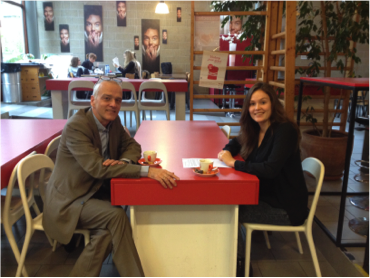
Could you first briefly outline the main focus of your research?
As a lawyer and historian I have always worked at the intersection of the two, namely the community history of Belgium, the history of its institutions, the break-up of Belgium and also a great deal on the role of the monarchy. Above all Leopold III, the functioning of the monarchy around Prince Charles and administrative collaboration during the Second World War.
What are the main developments that can be observed with regard to the role of the monarchy throughout Belgian history?
With still the same Constitution of 1831, the monarchy now has a completely different content, because the Constitution only sets out the broad outlines. The Constitution says a number of things, including that an act of the King has no political effect if it is not countersigned by the ministers. This follows from the fact that the King’s office is hereditary. Since he is inviolable, the King must also be covered by his ministers. Leopold I put it as follows: “je suis derrière le rideau”. The King hides, as it were, behind his ministers, except in 1856 regarding the convent law, when you see him come forward publicly himself for the first time. The latter is, however, exceptional. This rule of ministerial cover applies not only to formal royal decrees, but in fact to all of the King’s public conduct, such as his speeches.
As the media become more important, one also sees more of the King’s private life. Leopold I could still allow himself a great deal, but from the 1880s onwards the mass press is already more present with Leopold II. He quickly becomes the subject of controversy, while the politicians can do nothing about it. The King, however, is something like a fairy tale. It has to be one great perfection, and if that office is hereditary, there may not be a single stain or speck on it. A King who has illegitimate children everywhere does not match that ideal and fits poorly with people’s image of him. One observes that this pattern of expectations extends to the entire royal family: they must not step out of line.
The power of the King evolves throughout history. The weaker the political parties, the greater the King’s grip on the ministers. Between 1830 and 1840 the King is therefore truly the driving force of the government. The turning point comes when the liberals begin to rise and form a political party. At that moment you get the phenomenon of a minister discussing something with the King and telling the King “I will first ask my party”. We have real party governments in 1857-1864. Leopold I rejects this system and is away for six months without his ministers knowing where he is. This is of course a problem. Leopold I will not accept the party system, and there is a sigh of relief when his time is up. Leopold II does accept the party system and cleverly exploits the weaknesses of the parties. The Catholic party was a weak party and he really uses that weakness to influence party policy.
Let us now turn to the current state of affairs. Are the recent reforms of the allowances to the royal family and of the civil list sufficient, given the current public debate in which the words crisis and austerity are heard around the clock?
The allowances have indeed been cut back. The monarchy is an institution that costs money, ‘those people live in castles’. That is part of the deal, part of the system. A presidential system would undoubtedly also cost money. In addition, there are transitional problems: you cannot stop the allowances overnight. It is simply too late for that. On the other hand, these people also have large private assets, which leads to a certain ambiguity: when their house needs repairs, they will sometimes call a minister to ask whether he can arrange for it to be repaired by the landscapes and monuments department or by the buildings agency. When they travel abroad, they sometimes call defence for a plane. These people stand differently in the world, they have been raised differently. With Prince Laurent this is very clear. The errors of judgement he sometimes made are remarkable. But well, not everyone is equally shrewd, brilliant or diplomatic.
In my opinion it is good that they have reduced the allowances, and in my view the biggest problem is that all the King’s children (ed. note: the children of King Albert II) receive allowances. When you receive allowances as a child of the King, you are also bound hand and foot: you then in effect fall under the inviolability as well, you had better not work and in any case you have to toe the line. Despite all this, Princess Astrid’s husband nonetheless managed to become a banker, which is after all a risky profession these days. With Laurent, not practising a profession is a big problem. An allowance of about 300,000 euros a year apparently was still not enough. Laurent spends about 25,000 euros a month. The fact is that he was in this system and apparently cannot handle his money. One should not forget, however, that the allowances also pay for the entire household of the palace, which you can compare to a large SME. Princess Elisabeth will also receive allowances from the age of eighteen, and her staff will then be paid from them.
To save money, the palace will always try to have the people who work in the palace paid by the government. The archivist of the royal archives is a very interesting figure. There the person and the institution form a whole, and there is a dispute over the question of who will pay the archivist. Currently this is the State Archives, but that institution sometimes grumbles and actually only wants to pay for a half-time position, while the archivist works full-time.
Looking to the future, you cannot abolish allowances in general immediately. These are, after all, legacies from the past that you carry along, but over generations it can be done.
Is the King’s role in the formation of a government outdated, or does he still play an important role in this process?
I think it is perhaps the only important role left for the King. In the 541-day crisis the King really did have a function. He is the one who designates which party has the initiative. The King is a kind of traffic officer who directs the traffic. Albert II also committed some imprudent acts in those 541 days, such as the fact that Bart De Wever, with a humiliating title such as “éclaireur”, was allowed only two weeks in the arena. That is staging failure in advance. Why was it not two months? It was said at the time that the King had made a mistake. He should have let De Wever do his thing until he possibly crashed and the blame for the failure then lay with him. Now De Wever has come out of it in the role of martyr and it has strengthened him electorally.
Everything is relative, however. When I was invited as a guest on the programme Terzake, I had a conversation with Bruno Tobback before the broadcast. It emerged from this that even in this choice the King was a kind of police officer acting within certain limits and that it was the party presidents who were pulling the strings. Even if this is true, I still think we need such a traffic controller to fulfil certain functions.
Does the King still play a role in the appointment or dismissal of ministers?
I think that Baudouin sometimes still played a role in the appointment of ministers, but that Albert II no longer had any say in this at all. Over the resignation of the government they no longer had any hold at all. Guy Verhofstadt, by the way, published a very interesting anecdote about Albert II somewhere. The King considers not sanctioning the law on euthanasia and lets Verhofstadt know, whereupon the latter says that this is out of the question and that he simply has to sanction it. This illustrates that in some matters the King no longer has any say.
In 2013, N-VA and Groen called in the Chamber for the monarchy to be adapted to the 21st century so that democracy can fully play its part and the head of state could be elected democratically. Do you think there is support for such a call and that this reform could take place in a next state reform?
I think there is not sufficiently broad support for that. Even the socialists know they should not tamper too much with the monarchy. It is something Belgian, like beer and fries.
So you think it can be explained to the man in the street that so much money flows to the royal family because they happened to be born with the surname ‘of Saxe-Coburg’?
People like you and me believe that the monarchy as an institution is no longer of this time, but we are only a thin upper layer. Among the people in the street – with all due respect – you will notice an emotional value that they attach to the monarchy. It is also important for public opinion to see that the King is doing well. When Philippe was still crown prince he made a number of slip-ups, and people were already holding their breath over what this would bring once he became King. As you can see, he has not yet had a single accident de parcours and that is quite impressive. Because the transition is so great, we can infer that the head of the King’s cabinet has played a major role. Baron van Daele has a great deal of talent. He is a wise, engaging, but also very diplomatic man. He is doing well as head of cabinet.
In the French-language press you are now starting to hear that Philippe is the N-VA King, because the King allowed the N-VA to play a particularly large role in the government negotiations. Look how the perception has been reversed! You always get such a phenomenon, incidentally, when the King backs a particular political choice that part of the population finds absolutely outrageous.
Are you yourself in favour of a republic or of a – whether or not ceremonial – kingship?
I am very pragmatic and am in favour of nothing. I am not God the Father and I am not going to design a new country. Institutionally we must start from what we have. We started as a monarchy and it is neither conceivable nor feasible to abolish the monarchy in Belgium. That could only happen in the context of the break-up of Belgium, and I do not think there will be a split resulting in two entirely separate countries.
Flanders and Wallonia will drift further and further apart, but there will, I think, always be some kind of overarching federal structure with, wholly or partly, as its powers: foreign affairs, defence and finance. Europe will also demand this. I am speaking now, say, about the next 30 years, and then the King certainly has a place: if you want to keep Belgium together – however minimally – you will have to take the monarchy along with it. Even in a national Belgium where only symbols remain, the King is a symbol and he will therefore remain. Perhaps one day he will be the only one left, together with a minister of foreign affairs who has to ask the governments of the federated entities for everything. In that scenario there is not even a federal minister of finance any more, except perhaps for the debts of the past, because everything will then have gone to the regions. Such a scenario is not impossible. We shall see.
A kind of United States of Belgium?
Yes, and that is already largely the case now. The autonomy of the regions is enormous. In 2014 at first nobody wanted to become national prime minister, which is telling. At the federal level only rather unspectacular-looking powers remain, such as home affairs and justice. Social security too, but the politicians are splitting it with the aim of transferring part of it to the federated entities. The social departments are not attractive departments, because they are split over both the federal and the regional level. Justice and Home Affairs are thus the main federal powers, and there are very few resources for them.
I think there will always be an intermediate federal level with a monarchy in Belgium. It is irrelevant whether I am for or against it. In principle I am of course against it; the ‘unfreedom’ of the King and his family seems to me to be contrary to fundamental rights. Baudouin literally writes in his letter to Martens in which he refuses the law on the termination of pregnancy, “Am I then the only citizen in this country who does not have freedom of conscience?” The answer to that is ‘yes’. “Yes Sire, you are the only citizen in the country. That is precisely the point, the only one; all other citizens do have freedom of conscience, but you do not.” You could argue that this is contrary to the fundamental rights of the King. The monarchy, however, is a kind of public limited company, a kind of firm, and if you are in a firm, then as a shareholder you are not free to do as you please either. Whoever wants to become free must step out.
What is your view on the lawsuit that Delphine Boël has brought against King Albert to seek recognition as an illegitimate child?
I do understand why she is doing this. At the same time, the background is also interesting. In royal families in general, marital relationships are of a different nature than for the average citizen, because all those marriages are mariages de raison. You then get a decoupling of sexuality and marriage. There is a kind of tolerance system in those circles, so that they undoubtedly also talk about it openly with each other. Without contraception in those days, illegitimate children resulted, because a woman who can sleep with a King also likes to become pregnant now and then. Then they have a child and then they are also half a Queen. Of Leopold I, I think seventeen or eighteen illegitimate children are known. These children can be located geographically along the route Leopold I had to travel from Brussels to his castle in the Ardennes.
In those groups this is socially a very old tradition, but the Queen never likes it. So now there is this child. Around the year 2000 the modus vivendi in which the royal family lived was broken. Mario Danneels’ book “Paola. Van 'la dolce vita' tot koningin” was undoubtedly the trigger that set the campaign in motion. Something that had long been kept quiet thus became known after all, and also increasingly bubbled up within that family itself. Ultimately the King takes a position and says “Delphine, you are not my daughter”, which leads to a total rupture. Just imagine your father saying: “You are not my daughter”. At that moment you get a royal drama worthy of the stage. Shakespeare drew his inspiration from such people, not from an ordinary woman living in a flat.
Socially speaking, I find it very human that Delphine is bringing the action, because it must be a deep trauma for her. You also see the repetitive character in Delphine’s mother, who went through roughly the same thing. The heredity of disturbed family relationships is thus also found in the monarchy. Delphine is now furious. Legally, the big question is whether she has not brought her action too late, because an adult son or daughter can only contest paternity within a year of discovering that the legal father is not the biological one. So I suspect that the case may ultimately be declared inadmissible, because that time limit expired long ago, even if public opinion were to react strongly to this injustice.
If you had to hazard a guess, will we still have a King in 2030 – if Belgium still exists at that time?
We will still have a King then. Princess Elisabeth is not doing badly, judging by how she speaks. Her speech on 11 November was interesting, supposedly written by herself. Although she provided the impetus, the speech will have been further developed by the cabinet. She is nevertheless doing well and is clearly willing to play her role. She seems to me a capable, commendable daughter-in-law. If she becomes proficient in Dutch – which is very important – she will be a worthy heir to the throne.