Member of parliament, minister, judge. “But most of all I liked being a lawyer.”
Interview with Erik Derycke, emeritus judge of the Belgian Constitutional Court, on the appointment of judges, collegiality, public trust and resources.
Translated from Dutch. The original is the authoritative text. Read the original.
Key points
Erik Derycke, former minister of Foreign Affairs who served more than 18 years as a judge of the Constitutional Court until October 2019, reflects on his career. He defends the political nomination of judges by a two-thirds majority as the best way to represent all ideological tendencies, describes the Court as a close-knit body with firm internal debate, and voices concern about budget cuts. He says he enjoyed being a lawyer most of all.
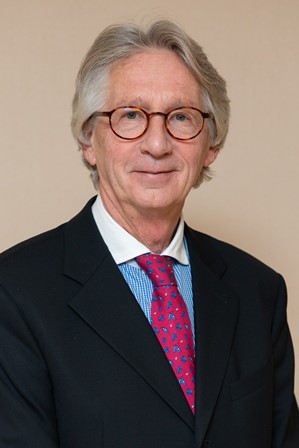
On 28 October 2019, Ghent University alumnus Erik Derycke became emeritus. With that, after more than 18 years, he took leave of his position as a judge in the Constitutional Court. Derycke was previously a lawyer, but most people probably know him as a politician. In the Martens and Dehaene federal governments, he was first responsible for Science Policy, later for Foreign Affairs and Development Cooperation. High time, then, for a conversation about his political and legal career.
A judge's farewell
Can you let go of the Constitutional Court?
DERYCKE: “The farewell was not easy. My career had three main parts. First I worked at the bar for a long time, then I combined that for a while with a political career, and finally I moved to the Constitutional Court. During the many years I worked there, I built up a close bond with the Court. You often hear that the Court is a closed community. You live very closely together there. We meet a lot and in this way build up a certain coherence within the case law. That is of course also necessary in order to be on the same line in society. Besides that substantive coherence, however, you also build up a personal bond, which makes the farewell quite hard. That does something to a person.”
You must already have made a few plans.
DERYCKE: “On 28 October 2019 I turned 70. That means I reached the statutory retirement age and my emeritus status began. The law does provide that you must still finish the cases you were already working on. In order not to fall into the well-known ‘black hole’ afterwards, I had already given it some thought in the past. Preparation is the best way to avoid that ‘hole’. I have been fortunate that I have been able to continue doing a number of things. For instance, after my career as Minister of Foreign Affairs I was able to maintain some foreign political contacts. I have also decided to take some courses, for example on political history. Going to concerts and reading books is certainly on my list too. And look, today I am already sitting here for an interview. (laughs)
In any case, becoming emeritus does create a void. It is then up to you to let everything decant like a good wine, and after a while to find a balance.”
You were succeeded by Yasmine Kherbache. The composition of the Court subsequently ended up in a storm. Judges are nominated by a two-thirds majority, but in practice the political parties decide. Do you find that procedure sufficiently transparent?
DERYCKE: “For the time being, I think no other system can solve this problem in a more orderly way. The starting point is that all ideological or political tendencies must be represented in the composition of the Court. How else can you decide fairly? You could say, for example, that Parliament should organise an exam for potential new judges in the Constitutional Court, but then you only get professors. And, with all due respect, I would not like to have a Constitutional Court composed solely of professors or of former members of the Court of Cassation or the Council of State. The current filter is therefore the best for now. With a different nomination procedure you quickly end up in a situation like in the United States, where the President himself selects someone. Then only people with the same convictions are involved. The best guarantee of balance is the confrontation between political convictions and ways of living together. That ‘filtrage’ does not happen just like that either. I am proud of my successor, she was carefully screened.”
From the Rue de la Loi to the Place Royale
The move from active politics to what was then the Court of Arbitration must have been a challenge.
DERYCKE: “Justice and politics have been the two most important passions in my life. In Parliament I witnessed, among other things, constitutional amendments, the creation of the Court of Arbitration and a number of state reforms. The extension of the Court's jurisdiction to the principle of equality and other essential rights was also carried out during my parliamentary career. Even then I thought: after politics it would not be a bad thing to make the move to the Constitutional Court. Staying in ‘big politics’ for too long is not good. Your political career has a use-by date. If you stay too long, you manoeuvre yourself into an outdated position. It is better to set yourself a goal. Ten years in government is more than enough, in my view.”
Do you see an evolution in the way the Constitutional Court is viewed by public opinion or in political circles?
DERYCKE: “So far we have been spared great public interest. That again ties in with that ‘monastic life’ people talk about. In public opinion there is, in my view, a fairly positive image. That is still the case in Parliament as well, although I would not dare say with certainty that young members of parliament still take it for granted that twelve people can rule on laws that have been voted, so that they may have to start the legislative process again.
To guarantee the proper functioning of the Constitutional Court, there must in any case be a considerable parliamentary and democratic element in the system. In other EU Member States that judicial review is sometimes not accepted at all, and that system is then manipulated. In our country it is still holding up well for now, although I do wonder whether we can continue to maintain that trust, especially in times of social media such as Twitter.”
Fortunately the Court has recently had its own Twitter account! Did you experience turning points in your career at the Court?
DERYCKE: “It has been a process. There have certainly been a number of decisive cases in which the whole Court had to reflect on the path we were going to take. Think of ethical issues such as contesting paternity or euthanasia, but also tax and economic problems. Society is very much in motion and the legislator regulates everything – albeit sometimes in an overly detailed way. That is why sooner or later all problems end up at the Court. No one is infallible and no one knows everything, but in my view the Court still does its job quite well to this day.”
A Court under pressure?
The Belgian political consensus model is under pressure. Does that seep into the Court's deliberations?
DERYCKE: “Sometimes things get heated. I am no great expert on monasteries, but at those moments the comparison does stop. Judges also ‘live’ together in the Court and respect each other's opinions, but we firmly defend our own opinions. That is a conditio sine qua non for doing good work. Contradictions and differing opinions can often produce a fine result.”
Are there aspects of the Court's functioning that you would like to change?
DERYCKE: “Not much. I think the Constitutional Court works fairly well at the moment. My only concern is that we are gradually suffering from the Belgian disease of budget cuts, and that is a real problem for a court. Our costs consist mainly of salaries for the intelligent people we employ, and it really must stay that way.”
In a memorandum from late 2019, the Court did indeed point out that more resources were needed. Yet compared with other courts it does not have the heaviest caseload.
DERYCKE: “The number of judgments we deal with varies. This year there were very many, in other years it was lower. Actually, it is not the number that is crucial, but the scope and the degree of difficulty of a judgment. We sometimes have judgments on which law clerks spend months or even a year of preparatory work. That is of course more important than the number of rulings.”
(The Court has meanwhile won its battle for more financial resources, ed.)
You were a member of the public social welfare council, municipal councillor, provincial councillor, federal member of the Chamber of Representatives, state secretary, minister and judge. What did you enjoy most?
DERYCKE: “Most of all I liked being a lawyer. When you practise as a lawyer, every day is different. It is a fight for your clients and a fight against yourself. I learned the most from it and gained many tools there that helped me in my later career. It is undeniably a wonderful profession and one I would recommend to every law student.”