Intermunicipal companies and a ‘grabbing culture’: time for structural change
After Publifin and Publipart: an analysis of the Flemish preliminary draft decree on local government and whether it reforms intermunicipal companies.

Translated from Dutch. The original is the authoritative text. Read the original.
Key points
The article traces the legal framework for intermunicipal companies from the 1922 framework act and Article 162 of the Constitution to the Flemish decree of 6 July 2001, and evaluates the 2017 preliminary draft decree on local government adopted after the Publifin and Publipart scandals. The authors find that its measures (limits on mandates and attendance fees, extension to private-law holdings, stricter declaration of mandates, approval of derived structures) mainly tinker at the margins. They call for a thorough evaluation and subsidiarity test of all intermunicipal companies, better transparency including private income, and stricter enforcement of declaration rules.
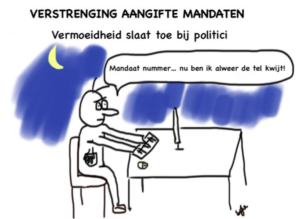 Headlines such as ‘En plots lijken het zakkenvullers’, ‘Hoe diep kun je in de graaicultuur zitten?’ and ‘Wat verdient een politicus? Niemand die het weet’ dominated the news in recent months. Following the uproar surrounding the intermunicipal companies Publipart and Publifin and the resulting discontent among the public and the media, the Flemish Government has already announced a number of measures. With proposals such as a ban on the accumulation of mandates, a salary cap and a duty of declaration, the Flemish Government hopes to tackle the abuses in the intermunicipal companies thoroughly. On 24 February 2017 the preliminary draft decree on local government was approved in principle for the first time by the Flemish Government. The preliminary draft aims to regulate the functioning of municipalities, public centres for social welfare (OCMWs) and cooperation structures from 2019 onwards. In addition, the federal Chamber of Representatives is trying, through the establishment of the working group on political renewal, to clean up politics' reputation by discussing proposals on political ethics and transparency. The intention is that the political parties' final proposals will be on the table by 30 June.
It is not the first time that political ethics, and more specifically the structure and functioning of intermunicipal companies, have come under scrutiny. Although there appears to be a will to put a definitive end to excessive remuneration for politicians through the tangle of intermunicipal companies, it is advisable to examine whether the preliminary draft decree on local government addresses the identified problems structurally and effectively contributes to better governance. Analysing the corporate governance culture in intermunicipal companies raises several questions. Where can the cause of the excesses be found? How does the role of government as a market player relate to its role of serving the general interest? Is there room for privatisation of intermunicipal companies?
The evolution of the legal framework
In 1922 the first framework act on intermunicipal associations saw the light of day. Based on former Article 108, second paragraph of the Constitution (current Article 162) and this framework act, provinces or municipalities could join together to jointly regulate and manage matters of provincial or municipal interest. Setting up intermunicipal companies seemed the appropriate way to respond to the social and economic circumstances of the time and, above all, to provide more efficient solutions to specific administrative and infrastructural problems.
Several intermunicipal companies subsequently developed in areas such as infrastructure (energy and drinking water supply, household waste, public works), regional development, culture and welfare. The liberalisation of the energy sector, progress in the telecom sector and cable companies, and the amended rules on water management in turn led to a revision of the intermunicipal companies. The intermunicipal companies of that time consisted mainly of municipalities, the State and provinces, private individuals and companies, because of their financial resources. Supervision of the intermunicipal companies consisted of a special control as regulated in the framework act and a general supervision described in the Royal Decree of 24 February 1959, which already at that time was framed within the objective of countering cronyism and the accumulation of mandates.
This was followed by the entry into force of the decree of 6 July 2001 on intermunicipal cooperation (hereinafter ‘DIS’), which still applies. The DIS has been amended several times in implementation of the Flemish coalition agreements for the periods 2009-2014 and 2014-2019, with the emphasis on simplifying the intermunicipal landscape, increasing the legitimacy of intermunicipal companies and relaxing administrative supervision.
Ultimately these changes proved not to go far enough, and recently a preliminary draft decree on local government was approved in principle that aims to replace the decree of 6 July 2001.
Preliminary draft decree on local government
The preliminary draft proposes measures to limit the number of board mandates and the attendance fees for board mandates in the intermunicipal companies and their subsidiaries. For instance, participants in inter-local associations may henceforth have only one delegate on the management committee, whereas previously this was “at least one”. For project associations, too, the number of delegates on the board of directors is limited to one. As regards attendance fees, it is provided that the directors of a legal person in which a service-providing or mandated association participates (Article 400, §2 of the preliminary draft) may not receive higher attendance fees for this than for a municipal council meeting. The same limitation also applies to board mandates in a company for the production, transmission or distribution of energy in which the municipality participates directly or indirectly. These attendance fees are also included in the calculation of the maximum remuneration for mayors and aldermen. Moreover, the remuneration that municipal councillors can receive is limited to one and a half times the remuneration of a member of the Flemish Parliament. In addition, a special duty to state reasons and approval supervision are introduced for the establishment of, and accession by, intermunicipal companies to private-law legal persons.
Learning from the past
A 2012 study by GUBERNA and a 2012 report by Transparency International Belgium show that intermunicipal cooperation structures have been falling short for some time. Several problems had already been identified regarding the structure and governance of intermunicipal companies. It was found that the modalities for the selection and appointment process are not determined objectively and that boards of directors generally have too many members, which jeopardises their proper functioning. Furthermore, the transparency act, which applies to directors and managers of listed companies and public enterprises, does not apply to intermunicipal companies, so that transparency regarding remuneration in intermunicipal companies is not optimal. Moreover, the ‘participants’ or shareholders in an intermunicipal company are mainly municipalities, provinces, the government and the private sector. The government thus exercises its role as shareholder and director on the one hand, but also as regulator, supervisor, subsidy provider or customer on the other. The question therefore arises as to whether these two functions can be reconciled.
The first domino fell with the Publifin scandal in Wallonia, where politicians pocketed generous fees for meetings at companies linked to the intermunicipal company. Often these even turned out to be attendance fees that politicians received without having to attend the meeting. The affair then acquired a Flemish sequel, when the fees paid by Publipart to politicians were leaked. Publipart is a private intermediate structure and therefore escapes the rules for intermunicipal companies. Questions were also raised about the company's investments. (Public) money was reportedly going to funds that invested in chemical weapons.
The recent public outrage over the excesses within the intermunicipal landscape was therefore the proverbial last straw. A political reaction could no longer be delayed, and several parties formulated proposals, each placing a specific emphasis. While Open VLD sees salvation in the privatisation of intermunicipal companies, N-VA mainly advocates stricter control. In addition, CD&V wants to introduce a mandatory declaration for all mandates, Groen proposes a salary cap and sp.a wants a more transparent approach to politicians' remuneration.
An evaluation of the proposed measures
In response to the recent commotion, the Flemish Government reacted quickly by approving the preliminary draft decree on local government. It contains a series of diverse measures to limit the number of public mandates. The most striking is the hollowing out of the functioning of the OCMWs and the transfer of their powers to the municipal councils. In addition, part of the decree is devoted to tightening the rules on sitting in intermunicipal forms of cooperation.
Fairly strict rules already exist today for intermunicipal companies. For example, the maximum attendance fee is 205 euros and members of parliament are prohibited from also sitting in an intermunicipal company. The ban on accumulation appears to be enforceable only for a limited list of 92 intermunicipal companies published by the Flemish government.
Under the new draft, the existing measures on sitting in intermunicipal companies would be extended to the underlying private-law structures and financing holdings that have a strong link with the Flemish intermunicipal companies. These holdings are not yet covered by these measures, because they are private-law structures. It is mainly here that quite a few ‘excesses’ appear to occur.
A salary cap for municipal councillors is also provided for. A municipal councillor will no longer be allowed to earn more from income deriving from his or her municipal mandate than the secretary of his or her municipality. Private income, however, still falls outside this.
The declaration of mandates would also be tightened. Although politicians already have to declare their various mandates to the Court of Audit, the Flemish and federal governments have agreed that in future they will also have to state the exact amounts. These new rules would also apply to those sitting in underlying structures. This agreement, however, has not yet been laid down in a legislative initiative, so it remains to be seen whether this tightening will actually materialise.
To control the proliferation of derived structures, local authorities will henceforth have to give better reasons why they opt for an alternative structure rather than a regular cooperation structure. On that basis, the competent minister will first have to give approval before the new structure can be established.
It is important to point out that this is a preliminary draft decree. There is therefore no certainty yet that the measures will actually lead to a decree. Coalition partner Open VLD wants the possibility of full privatisation of intermunicipal companies to be included in the decree, whereas the competent minister Liesbeth Homans does not seem to be in favour of this for the time being.
At first sight, the proposal seems a step in the right direction to tackle the main source of excesses in intermunicipal cooperation, but it is not certain that these rules go far enough to bring about a real change in mentality. The introduction of the ‘DIS’ in 2001 was also seen as ‘strict’ regulation, while it has since become painfully clear how easily the rules are circumvented in practice. The new decree would extend the rules to the underlying private-law structures. However, the problems are not located solely in that area.
The decree would also only enter into force by 2019. This could give ‘creative grabbers’ time to build alternative constructions and circumvent the rules once again. A change in mentality and ethical awareness will therefore be at least as important. We must also ask ourselves to what extent private-law intermediate structures are still needed at all. They mainly excel in their lack of transparency and often have little to do with core municipal tasks.
A missed opportunity?
The tightening of the rules on the declaration of mandates – if it actually materialises – can only be welcomed. However, one could go further in this respect too. Consider CD&V's proposal to extend the duty of declaration to all mandates of a public nature as well as to the directors of every company in which the government holds a majority stake. One could also follow the example of the Scandinavian countries, which traditionally top the list of least corrupt countries. In these countries, open government is held in very high regard. Sweden in particular has a far-reaching ‘offentlighetsprincipen’, which implies, among other things, that politicians must make their entire assets and remuneration public. The biggest problem, however, remains that the declaration rules are poorly complied with and enforced. It is therefore an absolute necessity to draw up a stricter sanctions policy, possibly with heavier penalties for violations.
Wallonia has already drawn inspiration from the Scandinavian model. In the aftermath of the Publifin affair, the Walloon Government announced several measures. For instance, the total remuneration of directors of private companies that are subsidiaries of intermunicipal companies in competitive sectors may not exceed 302,500 euros. In addition, the intention is for intermunicipal companies to carry out systematic prior checks on their subsidiaries. Furthermore, the rules for mayors who are at the same time ministers are tightened.
The preliminary draft decree on local government, however, provides no answer to the criticism that a proliferation of intermunicipal companies with a particularly large number of mandates has arisen. In the light of recent events, it seems appropriate to us to thoroughly evaluate the usefulness and functioning of the numerous intermunicipal companies and to subject them to a subsidiarity test. As already mentioned in 'Energiedistributie is te complex om aan de gemeenten en intercommunales over te laten', the question is, for example, whether municipalities should still have so much decision-making power over energy and water distribution. In Flanders there are currently four water distribution companies and two umbrella distribution system operators, in which in turn eleven intermunicipal companies sit. A far-reaching reorganisation of the intermunicipal companies seems necessary to increase transparency and limit the number of political mandates.
Open VLD's proposal to privatise the operation of intermunicipal companies could, for example, be considered in cases where intermunicipal companies compete directly with private players. The government could invest the savings in its core tasks, and there would also be more room for healthy competition. However, it does not seem to be a solution for cases where privatisation would lead to a natural monopoly, or for small-scale initiatives responsible for public services that already function well. For core municipal tasks such as waste processing, sewerage or regional development, intermunicipal cooperation remains relevant. A partial stock market listing for large entities, such as Eandis and Infrax (soon probably merged into Fluvius), is also a possibility to raise additional capital, given the current difficult financial situation. The reasoning that privatisation would lead to fewer conflicts of interest is, however, hard to endorse, since in principle no legal restriction has yet been imposed on politicians sitting on the boards of directors of private companies.
Conclusion
In the preliminary draft decree on local government we mainly see an attempt to tackle the excesses at the intermunicipal companies, by controlling the derived intermediate structures, tightening the declaration of mandates and introducing a salary cap and accumulation rules in the financing holdings. Nevertheless, we must note that these measures mainly tinker at the margins and, at first sight, are primarily aimed at reassuring public opinion in the short term and polishing the government's own image. If politics really wants to restore citizens' trust, more far-reaching measures will be needed. This preliminary draft decree mainly addresses the issue of intermediate structures, while the problem runs much deeper.
First of all, a thorough evaluation of all intermunicipal companies, re-examining core municipal tasks, is necessary. Furthermore, transparency about the financial earnings of holders of public office can still be improved considerably. In particular, we note that private income remains outside the duty of declaration. Moreover, little attention is paid to questions of conflicts of interest when the government is both shareholder and supervisor in intermunicipal companies. Legitimate critical questions can be raised when a politician earns more for a few board meetings than for his political mandate. Breaking such practices and a real change in mentality are necessary to curb future excesses.
BIBLIOGRAPHY
– PLAS, P., ‘Intergemeentelijke samenwerking: ‘Verlengd’, niet ‘verlegd’ lokaal bestuur’, Lokaal 2010, 25.
– BEELEN, B., DE CUYPER, G. en DRIESSEN, H., De intercommunale vandaag en morgen, XIV, 187-206.
– DEBIEVRE, J., ‘Op zoek naar meer democratische legitimiteit en controle (maar minder toezicht) – Recente wijzigingen aan het decreet van 6 juli 2001 houdende de intergemeentelijke samenwerking’, Tijdschrift voor gemeenterecht 2013, 64-75.
– GUBERNA, Bestuurspraktijken bij intergemeentelijke samenwerking (https://docs.vlaamsparlement.be/docs/stukken/2015-2016/g668-1.pdf).
– Transparency International, Evaluatie van het nationale integriteitssysteem België, (https://lirias.kuleuven.be/bitstream/123456789/367821/1/NIS+NL+september+2012.pdf).