Former politicians in the Constitutional Court: a necessary evil?
Why half the judges of the Belgian Constitutional Court are former politicians, how the D'Hondt-based appointment works, and the case for public hearings.
Translated from Dutch. The original is the authoritative text. Read the original.
Key points
Under the Special Act on the Constitutional Court, six of the twelve judges must have political experience as members of parliament, a requirement absent in Germany, Italy, Spain and France. The authors argue this can be defended because the Court often acts as a 'third legislative chamber' when balancing fundamental rights. They criticise the non-transparent, party-driven appointment practice (illustrated by Fientje Moerman's 2018 appointment) and support mandatory public parliamentary hearings for candidate judges.
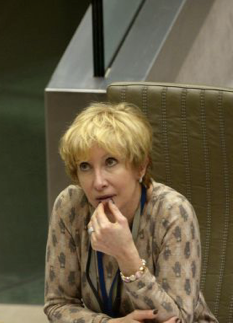 By Royal Decree of 18 March 2018, Fientje Moerman was appointed as judge of the Constitutional Court, replacing Etienne De Groot, who is retiring. Over the next five years another eight appointments will take place, each time to replace retiring judges. Traditionally, such appointments receive little media attention. The general public is therefore usually unfamiliar with the judges sitting on the Court. Yet they perform an important function in society by reviewing statutes, decrees and ordinances against the Constitution. Precisely for that reason it is remarkable that the judges are appointed with little transparency, without a full public and parliamentary debate.
The role of a Constitutional Court
Article 1 of the Special Act on the Constitutional Court (SACC) confers on the Court the power to review statutes, decrees and ordinances against certain parts of the Constitution. A reading of Article 1 SACC, however, only reveals the tip of the constitutional iceberg. Alec Stone Sweet, for example, has extensively examined how constitutional courts – in his view – function in practice as a ‘third legislative chamber’ in bicameral countries. Constitutional courts often have to strike a balance (‘balancing’) between, on the one hand, a fundamental right of an individual or group and, on the other, the fundamental right of another or a legitimate policy aim of the government. In striking such a balance, the judges must apply a proportionality test. That test usually comes down to the question whether less intrusive measures were possible to achieve the same result. When judges strike that balance, they are, according to Stone Sweet, actually doing legislative work. At that moment they examine whether other legislative initiatives were possible, or at least assess a balance previously struck by Parliament. Balancing conflicting rights therefore often leads to a rather ‘political’ decision.
The Belgian (special majority) legislator was already aware of this at the end of the 1980s when it transformed the Court of Arbitration into a de facto Constitutional Court by extending its power of review. The Court of Arbitration was henceforth allowed to review statutes against the constitutional principle of equality. The fear of a gouvernement des juges was explicitly raised during this debate: “Het gelijkheidsbeginsel is immers in hoge mate een beginsel waarin het juridische en het politieke, de legaliteit en de opportuniteit, innig verstrengeld zijn.”
The Constitutional Court transcends the classic separation between the three branches of government. It has features of an institution belonging to the legislative branch and of an institution of the judiciary. It is a court sui generis. The relationship between the (constitutional) legislator and the Constitutional Court can therefore not be described as a traditional principal–agentrelationship. The Court does not merely slavishly carry out what the (constitutional) legislator instructs it to do. On the contrary, the Court uses its powers to act as a counterweight. Alec Stone Sweet therefore describes the relationship as a trusteeship, as previously described by Giandomenico Majone. The constitution-maker gives the Constitutional Court a mandate to act in certain cases and guarantees its independence. The (constitutional) legislative power thus actually cedes the power to interpret the constitution, since the constitution is an incomplete contract with vague wording that often leaves room for interpretation. The constitution is the result of a compromise between various political actors, so that ambiguities and differing views may exist as to the precise content of the rights and obligations it contains. It is therefore up to the Constitutional Court to make interpretive choices and to weigh fundamental rights against each other.
Composition of the Court
The hybrid character of the Constitutional Court becomes even clearer when we look at its composition. The Court is characterised by a double parity. First of all, Article 31 SACC requires six Dutch-speaking and six French-speaking judges to sit on the Court. Next, according to Article 34 SACC, within each language group there must be as many judges with a political background as with a legal background (professor of law at a Belgian university, judge at the Court of Cassation or the Council of State, or law clerk at the Constitutional Court). Because at the end of the 1980s the Court became competent to settle constitutional problems with a political dimension, the legislator considered it necessary that six of the twelve judges had gained political experience as a member of the Chamber or the Senate (and later also of the parliaments of the federated entities). This is incidentally the only professional requirement for the six judges with a political past. This political experience was sufficient according to the Government to make a useful contribution as a judge in the Court. A law degree was not considered necessary.
By way of comparison, we examine the composition of the Constitutional Courts of four other Western European civil-law jurisdictions. They often impose stricter requirements on their highest judges as regards legal qualifications. In the German Bundesverfassungsgericht all judges must have the qualifications that give access to judicial office. The Italian Corte Costituzionale and the Spanish Tribunal Constitucional also consist of judges with many years of professional experience in the legal world. The French Conseil Constitutionnel, however, has no specific statutory requirement at all for candidate judges, although in practice only persons who have already proven their legal and/or political competence are appointed.
As a result, the French Conseil Constitutionnel is composed almost exclusively of judges with a parliamentary or ministerial past. In Italy, too, practice shows that a large proportion of the judges are former politicians. In Spain and Germany, by contrast, this is rare. Most of the jurisdictions examined thus require every judge of the Constitutional Court to have an extensive legal background. It is also striking that none of the four jurisdictions examined legally requires former politicians to sit on the Constitutional Court.
In 2003 an additional requirement was added to the composition of the Court. Article 34, §5 SACC henceforth provided that the Court must be composed of judges of different genders, which was not the case in 2003. Since 1 July 2014 this article requires that, both among the judges with a legal background and among those with a political background, each gender be represented by at least one third of the judges.
The appointment procedure in practice
Art. 32 SACC gives the King (de facto the Government) the right to appoint the judges, who are nominated alternately by the Chamber and by the Senate. Practice, however, looks completely different. The Belgian political parties divide a whole range of political posts according to a distribution key based on election results. The notorious ‘D’Hondt system’ is also used for nominating candidate judges for the Constitutional Court. The decision to nominate Fientje Moerman as replacement for Etienne De Groot was thus in fact a decision taken within her party, Open VLD. This practice obviously reduces the impact of members of parliament and senators on the appointment procedure, and can be seen in the context of the increased partitocracy in the Belgian democratic system.
At the same time, this practice contributes to a certain apathy in the press and in public opinion when a judge is nominated who has not been a (well-known) politician. Research by Evelyne Maes showed that our media report more intensively on appointments to the US Supreme Court than on appointments to our own Constitutional Court.
Partly for these reasons, Evelyne Maes argues for legally mandatory public hearings by a parliamentary committee for every candidate judge. In this way members of parliament, the media and the public can form an opinion on the candidate's competences. The recent massive media attention, also in Flanders, for the succession of Justice Antonin Scalia, or for example regarding candidate judge Matthew Spencer Petersen after his dismal performance before a Senate committee, seems to confirm this analysis. Such a hearing could also probe the judge's view of society. The importance of this is discussed below.
Decisions of the Court
Toon Moonen examined which factors influence the Court's decision-making. These include the interpretive method used, interpretations of the Belgian Constitution by other courts (within Belgium, abroad and at supranational level) and the interpretation of the Constitution by the other branches of government. His research shows, however, that these arguments are often merely indicative and do not necessarily lead to an unequivocal conclusion. In practice this means that judges can often take a decision that fits their view of humanity and society. There are undoubtedly differences between the judges' views of society. Alex Arts, former president of the Dutch language group in the Court, for example acknowledged that the substance of the Court's judgments could change depending on whether its composition becomes more progressive or more conservative.
Yet the Court presents its decisions as if they were adopted unanimously. In Belgium the secrecy of deliberations applies. This principle limits the Court's ability to give extensive reasons for its decisions, since all discussions between judges and writings preceding the judgment remain secret. This principle also entails a prohibition on the publication of separate opinions (so-called concurringand dissentingopinions) by the judges. This practice is common in the Supreme Court of the United States. This instrument is also found in continental Europe. Since 1970, for example, the Bundesverfassungsgericht may publish dissenting opinions of judges, and it also publishes how the judges voted.
It should be noted, however, that the members of the Bundesverfassungsgericht make much less use of dissenting opinions than their colleagues in the US Supreme Court. This is partly due to a different legal culture. In the United States it is much better known which judges sit on the Supreme Court, and the Court derives its legitimacy in part from the authority these individuals exude. In our country it is mainly the institution itself that carries this authority, not so much the individuals who sit on it. Dissenting opinions therefore seem to fit less well within such a culture.
Conclusion
A brief comparative analysis shows that a Constitutional Court does not always have judges with a political background. The choice can nevertheless be defended, since in practice the Constitutional Court often functions as a ‘third legislative chamber’ in which ‘political’ decisions are taken when balancing conflicting fundamental rights. They can draw on their experience to predict the impact of politically sensitive decisions.
What is certainly open to criticism is the current appointment procedure. The Court's judgments regularly involve important political choices in which the judges' personal worldview plays a role. In light of this, it is important that the appointment of judges is the result of a transparent and democratic process. Mandatory hearings could contribute to a better parliamentary and public debate, which would increase transparency. Such hearings would at the same time strengthen the role of members of parliament and senators, which may benefit the democratic legitimacy of the judges.
Bibliography
- Hand.Kamer 1988-89, 30 december 1988, nr. 633/4.
- MAES, E., De rol van een grondwettelijk hof in een rechtsstatelijk perspectief, Leuven, Faculteit Rechtsgeleerdheid KUL, 2016, 598 + 40 p.
- MOONEN, T., Het Grondwettelijk Hof en de Interpretatie van de Grondwet: een perspectief op argumenten en legitimiteit, Gent/Hasselt, UGent Faculteit Rechtsgeleerdheid/UHasselt Faculteit Rechten, 2014, 680 p.
- STONE SWEET, A., Governing with Judges; Constitutional Politics in Europe, Oxford, OUP, 2000, 232 p.
- VAN DORMAEL, K.-J., Het Grondwettelijk Hof: rechter of regelgever?, Gent, Groep Larcier, 2015, 117 p.
- BOONE, R., “Een diverser Grondwettelijk Hof, voor meer legitimiteit en kwaliteit”, Juristenkrant2016, afl. 324, 8-9.
- MAES, E., “Waarom geen hoorzitting voor nieuwe rechters Grondwettelijk Hof”, Juristenkrant2013, afl. 279, 10.
- MAJONE, G., “Two Logics of Delegation”, European Union Politics2001, vol. 2, afl. 1, 103-122.
- STONE SWEET, A., “Constitutional Courts and Parliamentary Democracy”, West European Politics2002, vol. 25, 77-100.
- STONE SWEET, A., “Proportionality Balancing and Global Constitutionalism”, Columbia Journal of Transnational Law2008, vol. 47, 73-165.
- STONE SWEET, A., “Constitutionalism, Rights and Judicial Power”, Comparative Politics2011, 219-239.