The citizens' budget weighed up
Participatory budgeting and the citizens' budget in Flemish municipalities: limits set by representative democracy, with Ghent and Antwerp examples.
Translated from Dutch. The original is the authoritative text. Read the original.
Key points
The article examines participatory budgeting, prompted by Willem-Frederik Schiltz's 2016 concept note in the Flemish Parliament, citing Porto Alegre and the citizens' budgets of Ghent (1.35 million euros) and the Antwerp district (1.1 million euros). Under Articles 33 and 42 of the Constitution and representative democracy, final budgetary authority stays with the elected body, so citizens' budgets currently work through earmarked subsidies. The authors identify pitfalls (participation paradox, participation elite, limited budgets, rigidity) and call for transparency, inclusiveness, adjusted multi-year planning and a decree-based framework.
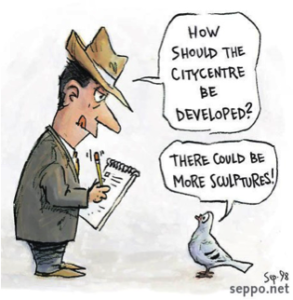 The call for citizen participation is growing ever louder, among both citizens and politicians. On 16 May 2016, for instance, Willem-Frederik Schiltz submitted a concept note to the Flemish Parliament, in which he put forward ten proposals to involve citizens more actively in policy through citizen participation. Citizen participation is a broad concept that covers many meanings. No conclusive definition of this concept can be found in Flemish legislation or in case law. It is therefore not a clearly delineated legal concept, but rather a set of instruments and methods that can be used to actively involve citizens in government policy. Citizen participation has recently been increasingly regarded as a (necessary) complement to representative democracy. This led Schiltz to propose, among other things, organising a citizens' budget in as many cities and municipalities as possible, and possibly also at Flemish level. In this contribution we therefore examine the concept of ‘participatory budgeting’ or ‘citizens' budget’ in more detail, focusing mainly on the municipal level.
What is participatory budgeting?
The idea of participatory budgeting is not new. As early as 1989 it was successfully applied in Porto Alegre, a city in the south of Brazil. At that time a third of its inhabitants lived in slums, without access to public services such as medical facilities, drinking water or schools. Various initiatives were launched to tackle this situation, with participatory budgeting as the spearhead of the reform. Citizen participation led, among other things, to an increase in social housing, a better sewage system and more schools. Thanks to this success, not only the citizens' budget itself continued to grow, but also citizens' interest. The success proved contagious, as the concept was soon taken up by other cities in Brazil. In the United Kingdom, Germany, Canada and the United States, for example, more and more citizens' budget initiatives are also taking place.
Schiltz describes participatory budgeting as a form of participation in which citizens decide on the allocation of public funds. Organisationally, this is done by having citizens take part in a meeting where deliberation takes place and where everyone can make their views and needs heard. In substance, the general budget is first explained in an accessible way so that citizens gain insight into the political challenges and the weighing of priorities. In principle it is crucial that this is not merely advice from the people, but is considered binding. By involving citizens and giving them a say in the decision-making process, the voice of the people is taken into account directly.
Accessibility and inclusion are important elements in such a participation process. The process aims to bring different groups of the population into contact with one another and into dialogue in order to make (policy) choices. Diverse population groups can thus jointly create opportunities to improve their living environment. The experience of the citizens' budget already organised in the district of Antwerp shows that sufficient effort must be made to reach and involve hard-to-reach groups. Organising preparatory tracks that inform them sufficiently proves to be a must. In this way the information asymmetry can be reduced to some extent and a kind of level playing field created. A different level of information and knowledge among participants in the process may indeed be one of the reasons why certain people do not feel addressed or are even deterred from taking part. When every participant enters the project with the same information and the same rules of the game, one can try to prevent one player from being much better prepared than another.
Rule-of-law framework for citizens' budgets in Belgium
To implement citizens' budgets in our political landscape, however, a number of rule-of-law limits must be taken into account. First, Belgium is a representative democracy based on national sovereignty. This principle means that decisions are not taken directly by the people, but by the elected representatives. Article 33 of the Constitution states that all powers emanate from the nation and are exercised in the manner laid down by the Constitution. Article 42 of the Constitution then provides that the members of both chambers represent the entire nation. This principle is somewhat nuanced by the fact that the people today have a say at the political level through all kinds of participation procedures. In principle, there is therefore room for participation through the organisation of citizens' budgets as proposed by Schiltz. Legally, however, the final decision-making power regarding the budget for now remains in principle in the hands of the competent representative body as laid down in the Constitution or by law, in the municipalities for example the municipal council. In Belgium it is already possible to give citizens a say where the competent policy body expressly grants a citizens' budget, for example through the award of a subsidy.
In addition, there are a number of other rule-of-law principles that must also be observed with regard to citizen participation, such as legal equality, legal certainty and the prohibition of arbitrariness. The principle of legal equality means that every citizen deserves equal treatment and has equal rights. This ties in with the above-mentioned requirement of inclusiveness, whereby one must actively try to involve as many people as possible from the various population groups. A municipality can meet this through accessible information and a targeted awareness campaign so that citizens can participate as well as possible. It is also advisable for the Flemish decree-maker to create a legal framework with some basic guarantees regarding the process of participatory budgeting. This was already discussed in the plenary session of the Flemish Parliament on 11 January 2017. A legal framework makes it possible to pursue a certain degree of uniformity.
Just as in the Netherlands, municipalities in Flanders have a fair amount of freedom in shaping their budget, but there are admittedly various limits to this freedom. These limits concern, on the one hand, the ordinary expenditure that must be made every year (staff, loan repayments…). On the other hand, municipalities must draw up a multi-year plan, which can make the introduction of a citizens' budget more difficult. The decree-maker could address this by giving municipalities the freedom, or even the obligation, to give citizens a say over part of their budget. Municipalities could also be required to explain their financial reporting in a more accessible and understandable way.
Under the Municipalities Decree, municipalities conduct a financial policy that is expressed in a budget. This budget is submitted by the Board of Mayor and Aldermen to the Municipal Council, which ultimately approves or rejects it. If one wants to implement a citizens' budget, a certain amount must be earmarked for citizens to dispose of. The city of Ghent is also in favour of participatory budgeting and has included the launch of a citizens' budget as an action point in its new policy note (action 60). This has since been approved by the Municipal Council of the city of Ghent. Since 2016, for example, Ghent has granted a citizens' budget of 1.35 million euros in the form of a subsidy. The city district Antwerp provided a budget of 1.1 million euros in 2016. The citizens' budget there was drawn up in the following three phases:
- At a kick-off event, citizens choose 12 themes that are important to them, which are then submitted to a district forum.
- The district forum is presented with a certain budget that must be divided among the 12 themes. Not every theme has to be allocated a budget.
- Citizens are given the opportunity to link a project to each theme by means of the allocated budget.
Citizen participation, a panacea?
It is fairly clear that citizen participation is not a panacea that will make the problems of today's representative democracy melt away like snow in the sun. An overdose of citizen participation can, for example, lead to administrative chaos. The American state of California, for instance, was on the brink of bankruptcy, with extensive direct democracy proving to be the main culprit. Moreover, the possibility of participation does not always lead to the (correct) use of the participation opportunities. In addition, there may be a so-called participation paradox, whereby (a call for) more participation can actually lead to greater exclusion of citizens.
According to David Van Reybrouck, another possible pitfall is that citizens might not reflect sufficiently. In principle, decisions are taken by the municipal administration in the light of a predetermined policy, whereas with a citizens' budget citizens suddenly have to take a decision themselves from one day to the next. A step-by-step plan such as that of the Antwerp city district can remedy this problem to some extent, since citizens then reflect on themes and the allocation of resources at different points in time.
Furthermore, the financial possibilities are often limited. Since not every municipality has an equally large pot of gold coins, the size of the amount made available is a difficult point. Even if city administrations try to support do-it-yourself democracy, a possible problem lies precisely here. Such support policies are often viewed from the standpoint and ideas of the administrators themselves, which may in practice leave fairly little room for innovation and initiatives of citizens' own. Sometimes, therefore, the intention is good but the execution leaves something to be desired. The size of the budget and the way in which citizens can dispose of the budget must consequently leave sufficient room for the needs of possible new initiatives. It is therefore important that the decree-maker or the local authority does not shape the concept of the citizens' budget too rigidly. As far as possible, participants must be able to give concrete shape to the budget themselves.
Ingredients for success
If participatory budgeting is to be spread widely across the Flemish landscape in a sound and successful way, it must not be rushed. The functioning of a citizens' budget requires a number of essential elements in order for it to have a sufficient chance of success.
First, there must be sufficient transparency about the way decisions are taken at municipal level. In this way citizens can see with their own eyes how they can have a real impact on policy. If this information is lacking, interest in taking part in such initiatives will quickly decline. Schiltz therefore also proposes to reverse the principle of passive publicity as much as possible. Normally, citizens must themselves take the initiative to consult or receive information, often through an energy- and time-consuming bureaucratic process. However, a shift should be made towards more active openness of government. The government should only be allowed to withhold information if it can give specific reasons for doing so. All other information should be easily accessible to citizens, online as far as possible. In this way citizens are given the opportunity to follow policy and to monitor the follow-up given to their decisions.
In addition, it is important that decisions on the allocation of the citizens' budget are taken by a sufficiently heterogeneous and well-informed group. Prof. Eric Lancksweerdt rightly points here to the danger of the so-called “participation elite”, namely a group of persons with high social and cultural capital who easily find their way to citizens' meetings and can dominate the decisions there to their advantage. Sufficient effort must therefore actively be made to guarantee inclusiveness. In practice, however, this is not an easy task. Some population groups are hard to reach and hard to enthuse about participating in such initiatives. The government must therefore invest heavily in this to increase the chances of success of participatory budgeting.
Moreover, Schiltz points out in his concept note that a municipality's multi-year planning can make a citizens' budget more difficult. He therefore proposes making the necessary amendments by decree, so that a citizens' budget does not get in the way of multi-year planning.
Finally, participatory budgeting must not come at the expense of the general interest. A government sometimes has to make difficult decisions that are not always well received by everyone. If such difficult decisions are left to a citizens' assembly, there is a risk that action will not be taken in time or not be taken fairly.
Conclusion
If one wants to actively involve citizens in policy, granting a citizens' budget can be an effective means. Through various moments of participation during the process of determining the themes and projects, citizens can enter into dialogue with one another (and with the government) about the spending of public funds. One thus creates, as it were, a bottom-up relationship (citizen-government), moving away from the classic top-down relationship (government-citizen). Introducing a general framework for a high-quality process of participatory budgeting requires the inclusion of a number of necessary guarantees in the legislation as well as a change in mentality. In addition, possible pitfalls must be taken into account, such as excess, a limited budget, the participation paradox, a participation elite and rigidity. The introduction and correct implementation of a citizens' budget requires, among other things, sufficient transparency, active efforts towards inclusiveness, an adjustment of the concept of multi-year planning and sufficient freedom to spend the resources without jeopardising the general interest.
Sources:
- DEZEURE, K., DE RYNCK, F. en STEYVERS, K., ‘Over de betekenis van lokale participatie in stadsvernieuwingsprojecten’, VTOM, 2011, 9-20.
- BALLON, P., Smart cities: hoe technologie onze steden leefbaar houdt en slimmer maakt, Leuven, Lannoo, 2016, 221p.
- LANCKSWEERDT, E., Handboek burgerparticipatie : een juridische verkenning toegespitst op het lokale bestuursniveau, met verdere beschouwingen over de ontwikkelingsmogelijkheden van onze democratie, Brugge, Die Keure, 2009, 654p.
- VANDE LANOTTE, J., GOEDERTIER, G., HAECK, Y., GOOSSENS, J., en DEPELSMAEKER, T., Belgisch Publiekrecht, Brugge, die Keure, 2015, 1594 p.
- DEEPTI, B., RATHORE, A., MAGUI, M. en PARAMEETA, K., Empowerment Case Studies: Participatory Budgeting in Brazil, Washington, DC, World bank, 2003,
- https://wfschiltz.be/lees-hier-de-conceptnota-burgerparticipatie/
- http://documents.worldbank.org/curated/en/600841468017069677/Participatory-budgeting-in-Brazil.
- https://biblio.ugent.be/publication/2154116/file/6772863.pdf
- https://www.antwerpen.be/nl/overzicht/burgerbegroting-district-antwerpen/wat-is-de-burgerbegroting
- http://www.vvsg.be/Werking_Organisatie/Gemeentedecreet/Documents/Planning%20en%20budgettering.pdf
- http://www.standaard.be/cnt/dmf20161118_02579747
- https://www.vlaamsparlement.be/parlementaire-documenten/parlementaire-initiatieven/1060898
- http://participatiewiki.be/wiki/index.php/Participatief_budget
- http://www.athene.antenna.nl/ARCHIEF/NR04-PortoAlegre/ABERS%20-%20Clientelisme.htm
- https://www.google.com/maps/d/embed?ll=-3.81666561775622e-14%2C-2.723752068115232&spn=174.256964%2C11.953125&output=embed&hl=nl&t=h&msa=0&z=1&ie=UTF8&mid=1XSWIeYDu8G8JuwUV2KNfQ9K06EU
- http://www.vlaanderen.be/nl/gemeenten-en-provincies/dienstverlening-van-gemeenten-en-provincies/de-beleids-en-beheerscyclus-voor-lokale-besturen
- https://www.nemokennislink.nl/activiteiten/de-participatieparadox
- https://www.antwerpen.be/nl/overzicht/burgerbegroting-district-antwerpen/wat-is-de-burgerbegroting
- https://stad.gent/sites/default/files/page/documents/Reglement voor het burgerbudget voor Gent 2016-2018.pdf
- https://stad.gent/sites/default/files/page/documents/ontwerpbeleidsnota communicatie onthaal beleidsparticipatie en stadsmarketing 2013-2019.pdf
- https://www.youtube.com/watch?v=wnZSKuXpa2Y&feature=youtu.be
- https://www.vlaamsparlement.be/plenaire-vergaderingen/1103612/verslag/1104776
- https://www.universiteitleiden.nl/en/research/research-projects/law/the-legitimacy-and-effectiveness-of-law-governance-in-a-world-of-multilevel
- https://www.nemokennislink.nl/activiteiten/de-participatieparadox
See here for the source of the image.