Does Belgium need a state of emergency?
Can Belgium declare a state of emergency? N-VA's 'Niveau V' plan tested against Article 15 ECHR, the French model and Article 187 of the Belgian Constitution.
Translated from Dutch. The original is the authoritative text. Read the original.
Key points
The article examines N-VA's September 2016 proposal to let the National Security Council declare a state of emergency by statute, and compares it with the French regime and with Article 15 ECHR and Article 4 ICCPR. The authors argue that because Article 187 of the Belgian Constitution forbids suspending the Constitution in whole or in part, a state of emergency requires a constitutional amendment. They note calls by scholars to constitutionalise a temporary state of emergency, but express serious doubts and urge the utmost caution in derogating from fundamental rights.
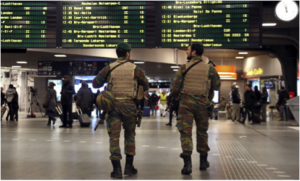 On 13 November 2015, France was struck at its heart by a series of terrorist attacks. In response, the French government introduced a ‘state of emergency’ that is still in force today. In Turkey, too, a state of emergency is currently still in force in response to the failed coup of 15 July 2016, under which several fundamental rights and freedoms are being jeopardised. After the attacks of 22 March 2016 in Brussels, the introduction of a state of emergency was also raised in Belgium. Such a state of emergency, however, inevitably puts various human rights under pressure. It is therefore an important question whether the end really justifies the means.
Proposal in Belgium
Unlike the Netherlands and France, the Belgian Constitution does not to date contain a legal basis for declaring a state of emergency. In September 2016, however, Minister of Security Jan Jambon (N-VA) presented a terror plan in the security memorandum 'Niveau V'. This plan provides that the National Security Council could declare a state of emergency at threat level four, in the event of terrorist offences or disaster situations threatening national security. Admittedly, a number of conditions are attached to this. The state of emergency can be introduced for the entire territory or part of the territory and for a maximum of three months, each time renewable for the same period. The Chamber of Representatives would then have to confirm the state of emergency within five days. In addition, the Secretary General of the Council of Europe would have to be informed immediately. According to this plan, the Constitution does not need to be amended and a statutory arrangement suffices. Reference is made in this regard to the opinion of Advocate General Raoul Hayoit de Termicourt in the judgment of the Court of Cassation of 4 March 1940 (Pasicrisie 1946, 193 et seq.). In our view, however, a constitutional amendment is indeed required, since Article 187 of the Constitution provides that the Constitution “cannot be suspended in whole or in part”. The opinion of Advocate General Hayoit cannot be invoked to escape this constitutional protection.
The state of emergency arrangement proposed by N-VA specifically means that the National Security Council would be enabled to deploy the army, prohibit public gatherings, control internal borders, impose house arrest, carry out administrative house searches, impose a specific ban on propaganda for a particular group, screen social media administratively and take websites offline. Preventive detention of persons who are seriously suspected of posing a danger to public order or security would also become possible, provided that certain statutory conditions are met, such as the duty to hear, necessity, proportionality, effectiveness and adequate reasoning.
In addition, the plan sets out several other proposals, such as strengthening the intelligence services, introducing a specialised court, expanding the criminal law arsenal and strengthening the administrative authorities. Consensus has already been reached on most proposals, but neither the governing parties Open Vld and CD&V nor the opposition parties support the proposal on the state of emergency.
Situation in France
The French President can, ‘in the Council of Ministers’, take a decision to declare a state of emergency without first having to account for his policy to parliament. The French authorities rely on art. 1 of the Act n° 55-385 of 3 April 1955 'relative à l'état d'urgence'. to lay down the conditions under which derogations from applicable human rights may be made. This article provides for the possibility of derogating from human rights ‘in the event of imminent danger resulting from serious breaches of public order, or of events which, by their nature or seriousness, constitute a public calamity’. The French authorities assume that this provision is equivalent to Article 15 of the European Convention on Human Rights (ECHR) and Article 4 of the International Covenant on Civil and Political Rights (ICCPR), which provide for a possible derogation from fundamental rights in the event of a state of emergency. This leads to greater flexibility in declaring a state of emergency than is permitted by the aforementioned international agreements. Supervision by the Human Rights Committee and the European Court of Human Rights is thereby also sidelined. The UN Human Rights Committee has already twice called for the withdrawal of the French reservation to art. 4 ICCPR (see recommendations in CCPR/C/21/Rev.1/Add11).
The declaration of a state of emergency makes it easier for the administration to apply certain techniques in the context of combating the imminent danger, in this case terrorism. For instance, no thorough reasoning, no assessment of proportionality and no review under ordinary law is required before resorting to measures such as house searches, bans on residence and movement, seizure of computer data, blocking of websites, house arrest, bans on gatherings, dissolution of associations and seizure of weapons.
On 10 February 2016, the Assemblée Nationale approved a revision of the Constitution with a view to combating terror. First, a legal anchoring of the state of emergency in the Constitution was approved, with a maximum duration of 6 months. Second, the possibility was put forward of stripping persons with dual nationality who have been convicted of terrorist acts of their French nationality, even if they were born in France. The latter proposal was strongly criticised by the opposition, the main point of criticism being the inefficiency of the measure. The measure would moreover undermine one of the foundations of the French Constitution, namely égalité, and would lead to stigmatisation of citizens with dual nationality. President Hollande ultimately abandoned his plan for constitutional reform on the stripping of nationality (see the blog post ‘De keerzijde van de medaille: fundamentele rechten en vrijheden onder druk door anti-terreurmaatregelen’).
State of emergency in the ECHR
The state of emergency is an application of the broader concept of state emergency law. According to B. van der Sloot (2012), this state emergency law “traditionally enables the executive, in the event of war, to temporarily restrict or suspend a number of rights, such as property rights and liberty rights, in order to secure the survival of the state”. In the context of emergency law, fundamental rights and freedoms may therefore be affected. Article 4 ICCPR and Article 15 ECHR contain an explicit regulation of this emergency law. If Belgium wished to introduce and use the concept of the state of emergency, it would therefore have to meet the (parallel) requirements of these articles.
Article 15 ECHR lists four requirements for derogating from certain fundamental rights and freedoms: 1° there must be a war or other public emergency threatening the life of the nation, 2° the derogating measures must be strictly required by the exigencies of the situation, 3° the derogating measures may not be inconsistent with other obligations under international law and 4° the Secretary General of the Council of Europe must be notified. Article 4 ICCPR adds that the derogations may not be applied in a discriminatory manner and that there must be an official proclamation.
The ratio legis for introducing these provisions stems from the fear of arbitrariness and of a prolonged or permanent state of emergency with extensive police or military power and limited civil rights. Abuse of the state of emergency is therefore a real danger. In Syria, for example, the state of emergency has been in force since 1963. In such a case, the state of emergency becomes the rule and a way for the government to draw power to itself at the expense of human rights. The advantage of including the state of emergency in Article 15 ECHR is that the European Court of Human Rights can thus exercise supervision, although the member states are granted a wide margin of appreciation in this respect (see Ierland t. VK (1978), Brannigan and McBride t. VK (1993) and A. e.a. t. VK (2009)). Owing to the recent terror threat, the proclamation of measures following a state of emergency is experiencing a revival. Since the terror threat is difficult to limit in time, there is a danger that the state of emergency, for example in France, will evolve from an exceptional regime into business as usual.
If the Belgian Parliament wished to create and use a legal framework for invoking a state of emergency, the measures derogating from fundamental rights and freedoms (such as a specific ban on propaganda and preventive detention) would have to be justifiable in the light of the requirements of Article 15 ECHR and the case law of the European Court of Human Rights. N-VA itself indicates in its security memorandum that the measures taken must meet criteria such as the duty to hear, necessity, effectiveness, proportionality and the duty to give reasons. In addition, the measures must always be temporary and there must be independent judicial review. Finally, account must be taken of a number of fundamental rights and freedoms from which no derogation is ever possible. Pursuant to Article 15, 2nd paragraph ECHR, no derogation may be made under any circumstances from the right to life, the prohibition of torture, the prohibition of slavery and the prohibition of punishment without law.
What about the Belgian Constitution?
The ICCPR and the ECHR offer only minimum protection. This means that contracting states may provide for broader protection. In Belgium, Article 187 of the Constitution can be regarded as a protection that goes further. In Belgium, in principle, no derogation from fundamental rights is ever possible, since Article 187 of the Constitution provides that “The Constitution cannot be suspended in whole or in part.” The Belgian Constitution does not provide for an express possibility to declare a state of emergency and, in Art. 187 of the Constitution, goes further than the ECHR. Article 187 of the Constitution therefore takes precedence over Article 15 ECHR and its derogation option, since the Constitution offers more protection than the ECHR. This means that every measure the Belgian authorities wish to take to tighten security must be taken within the limits of the applicable constitutional framework. All the rights and freedoms laid down therein must therefore be guaranteed and a derogation from them by invoking a state of emergency is not possible.
In the past, however, Art. 187 of the Constitution has not always been fully complied with, since force majeure has already been invoked in wartime. During the world wars, the government did not act according to the legislative procedure laid down in the Constitution, but worked with decree-laws. What is more, with the decree-law of 11 October 1916 on the state of war and the state of siege, the government in exile expressly decided to derogate from a number of constitutional rights. With this decree-law, for example, police powers were transferred from the provinces and municipalities to the national level. In addition, civil and military authorities could be given powers enabling them to perform acts contrary to certain constitutional rights. For instance, they could also carry out house searches at night, and monitor, withhold and seize correspondence.
A minority in legal scholarship holds that such a derogation is indeed constitutional. According to this school of thought, the state of emergency is a general principle of constitutional law and, moreover, the notion of ‘law’ in art. 53 ECHR can be interpreted broadly. In that case, general principles of law also fall under that term and an application of the state of emergency would indeed be constitutional. In our view, however, such a decree-law must be regarded as unconstitutional in view of Art. 187 of the Constitution. Leaving aside the minority view, it is therefore for the time being in principle not possible to declare a state of emergency in Belgium. This requires a constitutional amendment. Precisely in order to protect fundamental rights, professors P. De Hert and S. Sottiaux, among others, argue for making the state of emergency constitutionally possible. Whereas state of emergency measures are by definition temporary, policymakers in Belgium are taking ever more far-reaching measures in response to special circumstances through permanent and generally applicable laws. Belgium has already been criticised for this by Human Rights Watch. If the constitutional possibility existed to declare a temporary and clearly delimited state of emergency, measures could be declared applicable in that context that apply only for the limited duration of the state of emergency and only to the exceptional circumstances for which they are intended, for example combating terror suspects. It is argued that rights and freedoms would thus be restricted in a less intrusive manner. We nevertheless have serious doubts about this reasoning, certainly in the case of a state of emergency that is repeatedly extended. The utmost caution remains called for when derogating from our fundamental rights and freedoms. The end does not always justify the means.
Sources
- Législation Comparée – Le régime de l’état d’urgence, www.senat.fr/lc/lc264/lc264.pdf
- JAN, P., “Qu’est-ce que l’état d’urgence ? Son régime juridique”, 23 september 2016, www.droitpublic.net/spip.php?article5390.
- LOOF, J.-P., “Post-Parijs: het hoe en wat van ‘de noodtoestand’”, De Hofvijver – Politiek van Den Haag tot Brussel, Nieuwsbrief jaargang 5, nr. 58, 30 november 2015.
- LQDN, “L’Urgence d’en sortir – Analyse approfondie du régime juridique de l’état d’urgence et des enjeux de sa constitutionnalisation dans le projet de loi dit ‘de protection de la nation’”, 03.02.2016, www.laquadrature.net/fr/urgence-en-sortir-analyse-etat-urgence.
- SottiauX, S. “Nood aan een Noodgrondwet?”, Juristenkrant, 2015, afl. 319, 12-13.
- VANMOL M.J., “Antiterrorisme en burgerrechten in Frankrijk”, Vrede.be, 23 februari 2016 – via www.vrede.be/nieuws/anti-terrorisme-en-burgerrechten-frankrijk.
- VAN DER SLOOT, B., “Langs lijnen van geleidelijkheid: een jurisprudentieanalyse van artikel 15 EVRM”, NTM/NJCM-Bull. 2012, 208-229.
- VANDE LANOTTE, J. en HAECK, Y., Handboek EVRM, Deel 2, Artikel 15. Afwijking in geval van oorlog of algemene noodtoestand, Antwerpen, Intersentia, 2004, 189-224.
- VANDE LANOTTE, J., GOEDERTIER, G., HAECK, Y., GOOSSENS, J., en DEPELSMAEKER, T., Belgisch Publiekrecht, Brugge, die Keure, 2015, 1594 p.
-
HAEGENBORGH, V. en VERRIJDT, W., "De noodtoestand in het Belgische publiekrecht", in G. Van Haegenborgh, W. Verrijdt, J.-P. Loof, A. Dierickx, J. ten Voorde, G. Jocqué, M. Hebly en S. Lindenbergh, Preadviezen 2016, Den Haag, Boom, 11-85.
-
VELAERS, J., “Crisissen zijn uitdagingen, constitutionele crisissen dagen de grondwet uit” in Leysen, R., Verrijdt, W., Joosten, V., Alen, A., Liber Cogitationes, Intersentia, 2013, 849 – 864.
- Niveau V – Verandering voor veiligheid – Veiligheidsnota N-VA, www.standaard.be/cnt/dmf20160910_02462717.
- CALLUY, K.,“Denk na over het invoeren van de noodtoestand”, De Redactie, 19 november 2015, www.deredactie.be/cm/vrtnieuws/binnenland/1.2500967
- EHRM, Ierland t. VK
- EHRM, Brannigan and McBride t. VK
- EHRM, A. e.a. t. VK
See here for the source of the image.