The (leading) role of the municipalities in the Eandis saga: looking back and looking ahead
Why Flemish municipal councils voted on the Eandis–State Grid deal, how the VREG and DSO merger fit in, and the democratic deficit in energy distribution.
Translated from Dutch. The original is the authoritative text. Read the original.
Key points
The authors explain that energy distribution is a competence of the Flemish Region, but that in practice municipalities, united in intercommunales designated as distribution system operators by the VREG, manage the grid. The State Grid deal collapsed because the merger into Eandis Assets failed on two conditions precedent (Imea's demand for differentiated tariffs and VREG approval of the DSO). They argue that weakened administrative supervision and limited municipal expertise create a democratic deficit, and favour a unified Flemish distribution company with the Flemish government as majority shareholder.
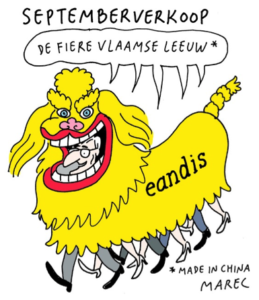 The most exciting pages in the Eandis story have been written for now. The deal with the Chinese state-owned company State Grid, which was to acquire a 14% stake in Eandis Assets as part of a capital increase, is off after all the commotion. Deal collapsed, end of story? Not according to Eandis, since fresh capital is still sorely needed both to pay down historical debts and to modernise the distribution grid. The desirability of turning to (foreign) private investors has already caused a great deal of ink to flow, with the background and possible motives of State Grid also being extensively criticised. In this contribution we do not address the opportuneness of such a deal, but try to provide a better insight into its legal background. After all, we wonder who understands why municipal councils – often with little expertise in the matter and on the basis of insufficient information – had to take part in deciding on a hypercomplex deal with a price tag of more than 800 million euros, under which a foreign state-owned company would gain influence in an important segment of our energy supply. We also look more closely at the question whether there is currently sufficient democratic control in the energy distribution sector.
The actors in Flemish energy distribution and the (leading) role of the municipalities
It is important to examine which actors are involved in the distribution of energy (natural gas and electricity) in Flanders. First, the competence for energy distribution belongs to the Flemish Region (art. 6, §1, VII, first paragraph, a) and b) SAIR). By decree, the Flemish Region grants the Flemish Regulator of the Electricity and Gas Market (VREG) the autonomous competence to regulate and monitor the energy market in Flanders and to strengthen its transparency. The VREG, in turn, designates the distribution system operators (DSOs) per geographical area. These DSOs are organised as inter-municipal cooperation structures, the so-called ‘intercommunales’. For their operational activities, the DSOs then rely on the common ‘operating companies’. Thus the operating company Infrax cvba covers the DSOs PBE, Infrax West, IVEG and Inter-energa. Gaselwest, Imea, Imewo, Intergem, Iveka, Iverlek and Sibelgas, on the other hand, fall under Eandis System Operator cvba. Eandis is called the ‘mixed’ sector because of the traditional presence of private holdings (e.g. Electrabel until 2014) and Infrax the ‘pure’ sector, since Infrax has traditionally been entirely in the hands of the municipalities.
It is thus the municipalities, united in intercommunales, that in practice manage the distribution grid, and not the Flemish Region, even though the Region is expressly competent for energy distribution. How did this intertwining of municipalities with energy distribution come about? When, at the beginning of the 20th century, the gas lamp in the streets gave way to the electric light bulb, cables had to be laid. This was done by the municipalities on the basis of their competence for ‘general police of safety’. Their competence was ultimately laid down in art. 2 of the since repealed Act of 10 March 1925 on the Electricity Supply. After the third state reform (1988-1989) the Regions became exclusively competent for energy distribution, but the distribution grids were still owned by the municipalities. The Energy Decree of 8 May 2009 coordinated all decree provisions on energy. The decree provided that the VREG could only designate a DSO on the proposal of a (group of) municipality(ies) where they own the distribution grid concerned (art. 4.1.1 Energy Decree). This provision logically meant that the DSOs consisted of inter-municipal cooperation structures. To this day, municipalities therefore unite in intercommunales that are designated by the VREG as DSOs. The DSOs, in turn, unite in operating companies (Eandis System Operator or Infrax). These operating companies are legal persons governed by private law, namely cvbas (cooperative companies with limited liability), in which the municipalities are shareholders.
The Eandis saga: ‘with all the Chinese, but not with… State Grid’?
Back to the concrete Eandis case. At the end of 2015, the Flemish DSOs Gaselwest, Imea, Imewo, Intergem, Iveka, Iverlek and Sibelgas decided to merge into a single DSO. As a result, the municipalities under these DSOs would, as regards energy distribution, be united in this super-intercommunale called ‘Eandis Assets’. Eandis Assets would in turn become a shareholder of the operating company Eandis System Operator cvba. The merger was, however, subject to a number of conditions precedent, two of which have not been fulfilled to date. Only once all conditions had been met would the merger take effect retroactively on 1 January 2016.
At the General Meeting of Eandis Assets of 3 October 2016, the municipal shareholders were to vote on the entry of a private partner, State Grid Europe Ltd., subject to the condition precedent that the merger be realised. As is well known, however, an uproar arose over the deal given the possible Chinese interference via State Grid and the letter from the State Security Service warning about it. Subsequently, disagreement arose within the municipal councils that had to decide on how their representative would vote at the general meeting of Eandis Assets.
The collapse of the merger and the role of the VREG
The general meeting ultimately turned out to be without object, however, since the merger between the DSOs could not go ahead, which immediately also jeopardised the deal with State Grid. The merger of the aforementioned DSOs into Eandis Assets could not be realised because two conditions precedent had not been fulfilled. The first condition concerned Imea’s (Antwerp) demand to still be able to maintain differentiated tariffs for each former ‘DSO zone’ after the merger. The VREG, competent for distribution grid tariffs pursuant to art. 3.1.4., §2, 12° Energy Decree, indicated in a press release that it could not accept this, since a separate tariff can only be applied as a transitional measure (see also art. 4.1.32, 7°-8° Energy Decree). According to the VREG, the constitutional principle of equality and non-discrimination would require a uniform tariff, since otherwise there would be discrimination depending on the customer’s place of residence. This position drew criticism from, among others, em. prof. A. Verbruggen. He pointed out that, owing to population density, Imea can keep its prices lower, so that Antwerp is in an unequal situation compared to other intercommunales. In a non-comparable situation, a different treatment may therefore possibly be justified.
The second condition precedent concerned the approval of Eandis Assets as a DSO, which is a competence of the VREG. The VREG had to verify whether the candidate DSO (namely Eandis Assets) met the conditions laid down by decree. The entry of State Grid was an important new factor in this respect, since the unbundling obligations require that activities of production and/or supply of energy on the one hand, and distribution on the other, are not intertwined (see art. 4.1.4, §2, 4° Energy Decree). State Grid Europe Ltd., as a subsidiary of the state-owned State Grid Corporation of China, as well as other Chinese state-owned companies, are after all busy buying into the European energy sector. The VREG was therefore not immediately able to give an unconditional ruling on this condition.
Chinese say in our utilities: more democratic control needed?
How is it possible that a foreign state-owned company could participate in this far from negligible segment of the energy supply? Should the Flemish government have intervened? First, it should be noted that private participation in intercommunales was prohibited by art. 10 of the Decree on Inter-municipal Cooperation (‘DIS’), which is why Electrabel, for example, had to withdraw from Eandis System Operator in 2014. Nevertheless, since the amendment of the decree of May 2016, as announced in the government declaration, it is once again possible to admit private investors into intercommunales, but only in the energy and waste processing sectors. The ‘energy’ sector of course also includes inter-municipal cooperation structures concerning energy distribution. The decree-maker had thus recently again allowed private entry into DSOs – albeit under conditions (private entry may not, for example, result in the private legal person acquiring a decisive influence). The Flemish government itself therefore had little to object to the entry of State Grid. General administrative supervision by the Flemish government of the decision of Eandis Assets to admit State Grid would have been possible afterwards, since Eandis Assets was a (‘super’-)intercommunale. In that context, the Flemish government could have reviewed the deal against, among other things, the general interest.
Since the amendment of the Decree on Inter-municipal Cooperation (‘DIS’) in 2013, however, administrative supervision of intercommunales has been relaxed. For instance, the government commissioner was abolished, so that prior review of certain decisions is no longer possible. This relaxation fits into the evolution of the relationship between the Flemish government and the (supra-)local authorities, in view of the ‘municipal autonomy’ guaranteed by art. 41 of the Constitution. This relaxation of the administrative supervision regime is compensated by stricter control instruments on the part of the municipalities (new, for example, is that municipal councillors can, on the basis of art. 52 DIS, request that the minutes and the documents mentioned therein be made available electronically by the intercommunales). Such a trade-off is in any case not new in the context of inter-municipal cooperation. Already in the bill for the Act of 22 December 1986 on intercommunales, the legislature put forward a more far-reaching democratisation and a lightening of supervision. It remains unclear for now whether this is a good thing as regards energy distribution. First, one may wonder to what extent the distribution of energy still belongs to the municipal interest. The fact that the municipalities still play an important role in energy distribution does not stem from an express competence of the municipalities. The Regions are in principle competent, but because of the aforementioned art. 4.1.1. Energy Decree the municipalities play an important role in practice. That regional competence (given expression in the Energy Decree), the role of the VREG and the fact that the municipalities unite in intercommunales which in turn cooperate in overarching operating companies indicate that this is no longer a purely local matter. Second, the municipalities often lack sufficient expertise in the matter to properly exercise their role as ‘democratic controllers’ in the inter-municipal DSOs. That democratic control function is reflected, for example, in the composition of the governing bodies, the determination of the voting behaviour of the municipal representative at the general meeting, the specific information and reporting obligations, etc. Apart from energy distribution, J. Debièvre indicated that municipal councils, with the control instruments granted to them, can in any case carry too little substantive weight on intercommunale policy.
Furthermore, the operating companies Eandis System Operator and Infrax are private-law entities (namely cvbas), which implies that administrative supervision is only possible indirectly, via the general administrative supervision of decisions of the inter-municipal DSOs that may have an impact on the operating companies. There is, of course, still the VREG, which has many supervisory powers.
In the past, a proposal for a decree was therefore already launched on the possibility of merging Eandis and Infrax. This would mean that the inter-municipal DSOs would disappear and a single unified utility would be placed under the Flemish government. In this way, just as happened at the time with the creation of the Flemish transport company De Lijn, a uniform service could be offered to all customers. Former Flemish Minister of Energy F. Van den Bossche also argued for this. Infrax, however, was opposed, because removing competition could stifle innovation. That argument does not entirely hold, of course, since a legal monopoly already applies in any event. Only one grid operator can be designated for each distribution network, since it would be economically difficult to justify allowing several parallel distribution grids. Unfortunately, the proposal died a quiet death. This is a pity. A thorough debate on this is warranted, given the elements mentioned above, which clearly point to a democratic deficit in energy distribution. This became painfully clear once again in the recent Eandis debate.
Looking to the future
Now that the deal with State Grid is off, another solution must be found. A financially healthy distribution system operator is crucial. In the future, for instance, money will be needed to convert our distribution grids into so-called ‘smart grids’. These are grids that can meet the needs brought about by a transition from centralised to decentralised generation of electricity (i.e. the shift from generation in coal, gas and nuclear power plants to wind turbines and solar panels). Problems may also arise in the short term. Credit rating agency Moody’s is threatening to lower Eandis’ rating, which would obviously not benefit its creditworthiness. Without a sustainable solution, it is ultimately the citizen who risks footing the bill in the form of higher distribution grid tariffs.
Flemish Minister of Energy B. Tommelein has already argued for a stock market listing of Eandis, following the example of transmission system operator Elia. For now, however, this is not possible, since only registered shares are currently permitted in intercommunales. The possibility of a citizens’ cooperative has also been examined. In a press release , however, Eandis itself explained the limited feasibility of such a cooperative. To remain exempt from the prospectus obligation, the countervalue of an offer of shares may not exceed 5 000 000 euros (see art. 22, §1 Prospectus Act). It therefore seems unlikely for Eandis that the required amount could be raised in this way. A final alternative is to look for a new private partner. To avoid further controversy, an investor without ties to a foreign government could then be chosen. Private entry was in fact the original intention of the decree-maker. This scenario nevertheless seems off the table for now, since the merger of the DSOs into Eandis Assets could not go ahead.
Finally, a thorough debate is also needed on the required democratic control over energy distribution. Is it still appropriate today to leave so much decision-making power in the hands of the inter-municipal DSOs, while democratic control by the municipalities shows clear shortcomings? A unified Flemish energy distribution grid company with the Flemish government as majority shareholder seems advisable, since this would allow much more effective democratic control. A substantial financial hurdle must of course be pointed out here, since the municipalities would then have to be bought out.
SOURCES
- DEBIEVRE, J., “Bijzondere vormen van lokale verzelfstandiging” in DUJARDIN, J. en SOMERS, W. (eds.), Gemeentelijke verzelfstandiging en intergemeentelijke samenwerking, Brugge, Die Keure, 2013, 453-475.
- DEBIEVRE, J., “Op zoek naar meer democratische legitimiteit en controle (maar minder toezicht) – Recente wijzigingen aan het decreet van 6 juli 2001 houdende de intergemeentelijke samenwerking”, T.Gem. 2013, nr. 2, 64-75.
- DEWAELE, F. en DELVAUX, B., “Van de hervorming van het netbeheer in het Vlaamse gewest tot de creatie van het Vlaams energiebedrijf” in DEKETELAERE, K. en DELVAUX, B. (eds.), Jaarboek Energierecht 2011, Antwerpen, Intersentia, 2012, 111-145.
- VAN DEN BROECK, A., “Zo kan de Eandis-deal met de Chinezen toch nog mislukken”, De Morgen online, 19 september 2016 (www.demorgen.be/economie/zo-kan-de-eandis-deal-met-de-chinezen-toch-nog-mislukken-b6b0990d/).
-
VANDORPE, W. en CALLAERTS, R., “Het nieuwe kader voor distributienettarieven in Vlaanderen: Nulla dies sine linea” in DEKETELAERE, K. en DELVAUX, B. (eds.), Jaarboek Energierecht 2015, Antwerpen, Intersentia, 2013, 209-237.
- Voorstel van decreet (H. SANCTORUM e.a.) houdende de oprichting van een Vlaams Energiedistributienetbedrijf (VEDNB), Parl.St. Vl.Parl. 2012-2013, nr. 1946/1.