Interview with Prof. W. Van Eeckhoutte: defederalisation of social security
Prof. Willy Van Eeckhoutte on the Sixth State Reform's transfer of family allowances to the Communities, the role of the COCOM in Brussels and solidarity.
Translated from Dutch. The original is the authoritative text. Read the original.
Key points
In this interview, labour and social security law professor Willy Van Eeckhoutte discusses the Sixth State Reform's transfer of family allowances to the Communities, which he sees as a historic chance to rebuild the scheme from scratch at the cost of reduced inter-community solidarity. He doubts the Common Community Commission is the right body for Brussels, expects health care costs to be the next candidate for defederalisation while replacement incomes stay federal, and sees little impact from the Court of Justice's Flemish care insurance judgment beyond reverse discrimination.
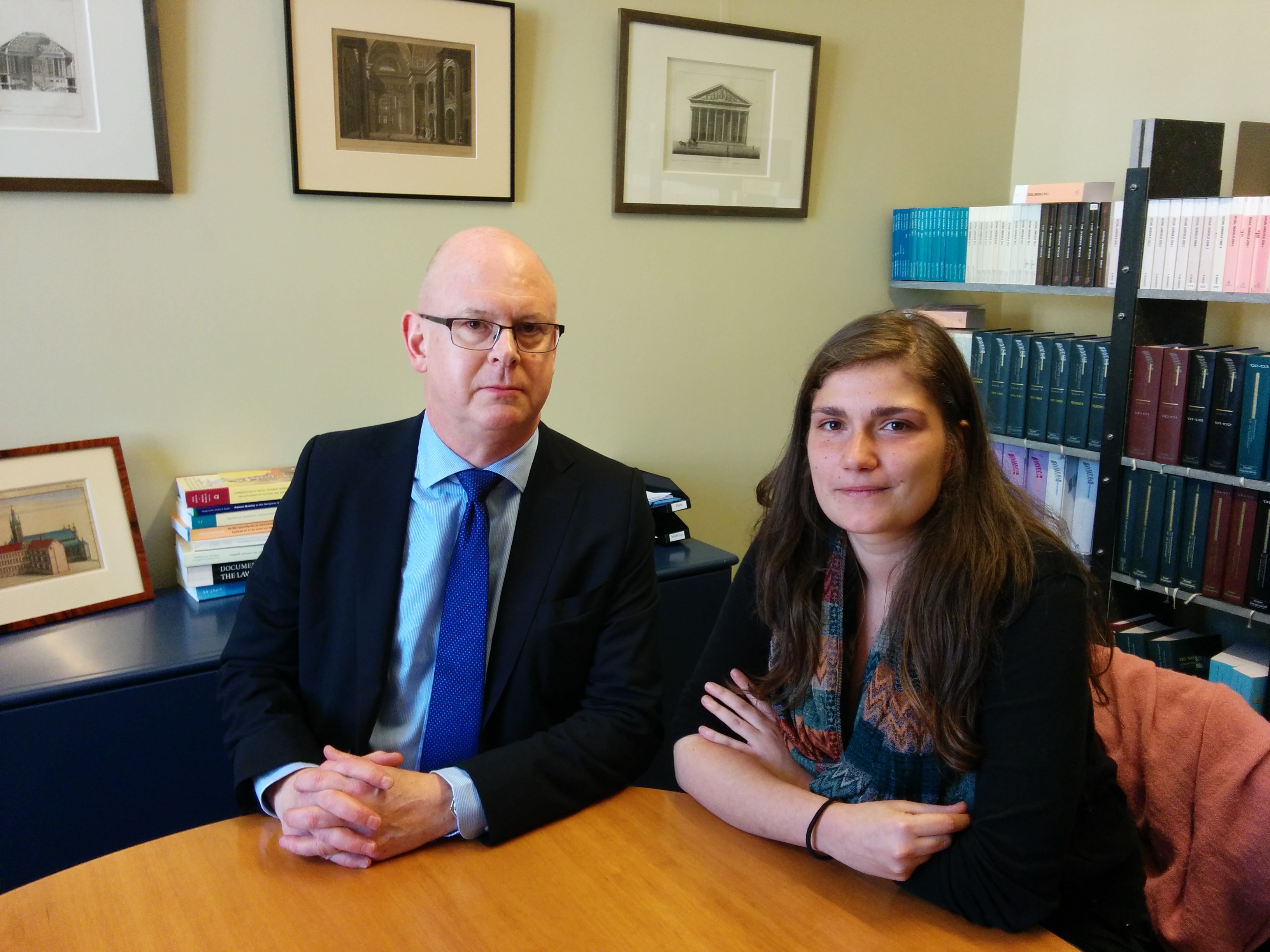 Willy van Eeckhoutte is an extraordinary professor at Ghent University, where he has taught at the Faculty of Law since 1986, including the courses on labour law and social security law in the bachelor's and master's programmes respectively.
In 1975 he became a lawyer at the Ghent bar. In 1999 he was appointed lawyer at the Court of Cassation, so that since then he has been a member of the bar at the highest Belgian court, which counts twenty lawyers across the whole country.
Willy van Eeckhoutte also taught at the Ghent-Leuven Management School and at KU Leuven (Pensions Law Course). Students Jasmien Van der Sype and Vicky Vanhoutte put a number of questions to Professor Van Eeckhoutte, which led to a particularly interesting interview.
Some quotes
“You can start from zero and ask yourself: what is child benefit in 2015? In carrying out that exercise, we no longer have to rely on the laws of the 1930s with which we are still working today.”
“In Flanders they are already well on the way to developing a new system, whereas in Wallonia and Brussels they are not that far yet and would be inclined to adopt the existing system as the Walloon and the Brussels system respectively.”
“The Common Community Commission has not had many powers until now and has not done much yet either. Suddenly it receives an enormous and important power for Brussels”
“There is no more solidarity: there will no longer be transfers from one community to another, which is nevertheless essential for social security, namely that solidarity.”
Could you first briefly explain which changes the Sixth State Reform has brought about in the defederalisation of social security, namely family allowances?
Family allowances are the most important, but certainly not the only one. A few other social security matters have been transferred, but they are less to be regarded as one global package. There is the management of hospitals and of institutions for the elderly, which also include aspects of financing and quality control. The monitoring of the active job-search behaviour of the unemployed is also being defederalised. As well as some social assistance aspects related to employment, for example public centres for social welfare (OCMWs) that strive to help their clients – as they are now called – into work.
Family allowances are the most fundamental part of the defederalisation because family allowances were transferred as a block. That brings major changes. Moreover, it is a historic moment: for the first time since the creation of social security, one can start devising and building something from zero, with all the knowledge acquired in the past about what is bad and good. There is now the opportunity to build something from scratch. That is an important challenge that sets off an enormous movement, namely rethinking an important component of social security. In my view, that should also go hand in hand with rethinking social security in general.
In general, what do you see as the advantages and disadvantages of a defederalisation of social security?
The advantage is that defederalisation leads to more homogeneous packages of powers. Family policy is a power of the Communities, whereas before the transfer family allowances were part of federal social security. An important instrument of family policy was therefore not in the hands of the Community. That is now changing. The agency Kind & Gezin will now also play a role in the family allowance scheme. Under the old federal family allowance system that would not have been possible. Defederalising social security creates opportunities to pursue a more integrated policy.
The disadvantage is that solidarity between the Communities decreases. The financing is structured in such a way that you receive a budget from the federal government, calculated on the number of eighteen-year-olds each Community has, and you have to make do with that. There is no more solidarity: there will no longer be transfers from one community to another, which is nevertheless essential for social security, namely that solidarity.
In your view, do the advantages outweigh the disadvantages?
Yes, I think so, certainly as regards family allowances. There I do not think the disadvantages are very great. Family allowances were already fairly objectified: you have children of a certain age, which is something different from, for example, consumption behaviour regarding medical costs. There you could say that in Wallonia people incur more medical costs than in Flanders because they go to the doctor sooner. That does not apply to family allowances. Although it was found that in Wallonia more benefits were paid for disabled children. I do find that a little strange: you can hardly assume that Walloons have more disabled children than Flemings.
To what extent do you think Flanders could develop a better policy for social security in general and family allowances in particular?
You can start from zero and ask yourself: what is child benefit in 2015? In carrying out that exercise, we no longer have to rely on the laws of the 1930s with which we are still working today. In the 1930s, the aim was demographic: to boost population growth through child benefit. That path was abandoned long ago. Now the upbringing of children is central, so you should be able to position family allowances better in relation to other existing measures. You also stimulate the upbringing and care of children through tax measures, for example a tax reduction, and through study grants, as regards education, which is also part of upbringing. You can better align those things with one another.
Because you have more instruments in hand and are not hindered by historical frameworks that could not be changed because French speakers blocked certain decisions, for example, you have more potential and can work more innovatively. That applies to family allowances in particular, but also in general, because family allowances are only one building block of what will ultimately become a Flemish social security.
Are there already notable differences between the federated entities in concrete family allowance policy?
Certainly not so far: since last year we have had a general child benefit act that applies to all population groups. Before that, the legislation was also the same for all federated entities. Now the same scheme applies to all population groups, namely employees, the self-employed and civil servants. Previously, there was little pronounced policy, or at least no policy that gave rise to differences, because policy was conducted at the federal level. So there are no notable differences yet, except perhaps that aspect of disabled children, but the mere fact that more benefits are paid in Wallonia than in Flanders can of course not be called policy.
In the coming years more differences will arise. In preparing the community family allowance scheme, one can see that policymakers in Flanders are further along in the thinking exercise than in Brussels or Wallonia. I am chairman of the Association of Child Benefit Funds, so I have insight into the state of affairs. In Flanders they are already well on the way to developing a new system, whereas in Wallonia and Brussels they are not that far yet and would be inclined to adopt the existing system as the Walloon and the Brussels system respectively.
Family allowances were transferred to the Communities, but – comparable to the transferred powers regarding juvenile sanctions law – in the Brussels-Capital Region the Common Community Commission (COCOM) is competent. Is it legally impossible to make the Communities competent for social security in Brussels, given a possible violation of the principle of equality?
That is rather a question for constitutional specialists; I cannot immediately answer whether it is legally possible. At first sight I would be inclined to say yes; I am thinking of the example of the care insurance, where the Flemish Community is also competent for Flemish residents of Brussels. But again, I know too little about constitutional law to dare to make statements on this.
Do you consider the COCOM an appropriate body to exercise powers regarding social security, or do you think the Brussels Parliament could also exercise these powers?
As far as I can see: the Common Community Commission has not had many powers until now and has not done much yet either. Suddenly it receives an enormous and important power for Brussels, because there you have a very young population.
Without any experience and unexpectedly, the COCOM is handed this power and that money. On the basis of what it has done so far, taking its powers into account, it does not seem to me to be the most appropriate body. I would – though not hindered by limited constitutional knowledge – rather think of the Brussels Parliament, because the definition of Brussels is more geographical than what Communities are. Whether this is constitutionally possible, I do not know [read more about this in the blog post on the future of Brussels].
Which aspects of social security are suitable for defederalisation?
I think it should rather concern the other cost reimbursement we have: the medical costs scheme, where, as in the family allowance scheme, we have a universal scheme. At present every child in Belgium receives family allowance. Every resident of Belgium, however, is also entitled to reimbursement of medical costs. In that respect the two are related.
I think it would be better there to detach financing and organisation from professional statuses and not look at whether you are an employee, self-employed or civil servant, and whether or not you are professionally active. Instead, you could use the residence criterion: you live in Flanders or are domiciled in Flanders, so we are going to develop a family allowance and medical costs scheme for you. The innovation would be to decouple it from professional status and make it more of a national insurance, as in the Netherlands and Great Britain: a universal scheme independent of professional status.
The next sector to be defederalised will therefore probably be the medical costs sector, because there too you have a universal aspect. With replacement incomes it is somewhat different: replacement incomes presuppose that you have an occupation. You cannot determine a sickness benefit in the same way for a self-employed person as for an employee. The one loses his wage, but when a self-employed person is ill, he does not necessarily lose his income. You will still have to make professional distinctions there. In my view, in the next stage of defederalisation, replacement incomes will therefore remain federal.
What are the consequences of the Court of Justice's Flemish care insurance judgment for the defederalisation of social security?
Actually none; a certain category of persons who have made use of free movement [in the EU] can in this way, by a detour, claim the benefits of the Flemish care insurance. As the politicians also responded when the judgment came out: nothing changes about the concept as such.
You will, however, always be left with that reverse discrimination, which is a handicap. The direction of travel is not affected in the sense that Europe is signalling that this is dangerous or causes problems. There are a few problems, but they can be solved.
So there is not much impact on the defederalisation of social security. Family allowances and possible further steps in the defederalisation of social security can be regulated in the same way as the Flemish care insurance, namely by looking at residence in Flanders.
Belgians who have at some point exercised their free movement of persons can invoke more rights than Belgians who have not. Do you consider this a form of unjustified reverse discrimination that should be eliminated?
If anomalies exist, it is always better to eliminate them, but you are dealing with European rules that everyone must respect. What the Court of Justice decided is in conformity with European law. It would be best for this to be eliminated. It does not seem to me to be a huge priority. I have also not yet heard many indignant voices from people complaining that they did not make use of their free movement.
It could of course become a different story if you also consider family allowances and, for example, medical costs. That will be more troublesome. In my view, the existence of reverse discrimination is a point Europe should pay attention to. It also occurs in other countries. It is a blemish on Europe that will only grow in the future.
If you had to look into a crystal ball for a moment, what do you think the division of powers regarding social security will look like in 2030?
Then we have to do some counting: the next elections are in 2019. By 2030 we will have a few more. I think that in 2030 there will not just be a few elements of social security in Flanders, such as the care insurance, which is Flemish, and the upcoming family allowance, but that a substantial part will already be organised at the Flemish level. We will evolve towards a more Flemish social security. I do not think it will be entirely Flemish – if Belgium still exists, at least – but they will be more equivalent powers with a strong regional impact.